Interpreting Signs and Symbols in Divination
Summary: This article delves into the profound world of signs and symbols in divination, explaining how they serve as a universal language of intuition. You will learn how different cultures and practices utilize symbolism to predict and understand the future, as well as how to develop your ability to recognize and interpret these messages. Discover how signs from nature, dreams, and intuitive insights can guide you on your path of self-discovery and spiritual growth.
Interpreting Signs and Symbols in Divination
Divination, as an ancient art of accessing deeper levels of knowledge and understanding, has always relied on an intricate web of signs and symbols. These elements are not mere decorations or random occurrences; they represent a universal language that transcends words and cultural barriers. They are bridges between the visible and the invisible, between the conscious and the subconscious, between the present and the potential future. Understanding this language is key for anyone who wishes to delve into the depths of divination, whether as a practitioner or as someone seeking guidance.
This comprehensive guide will walk you through the fundamentals of interpreting signs and symbols in divination. We will explore how different cultures have used and continue to use symbolism to reveal secrets, predict events, and find answers to the most profound questions. We will delve into methods and techniques that help in recognizing and understanding these intuitive messages, as well as the importance of developing one's own intuition for better interpretation. The goal is to equip you with the tools and understanding necessary to navigate this rich and meaningful world of symbolic communication.
Understanding signs and symbols is a process that requires patience, openness, and a deep connection with one's own intuition. It is not merely an intellectual exercise, but rather a way of being, where we are attentive to the subtle messages the Universe sends us. From ancient petroglyphs to modern Tarot cards, from dreams to unexpected encounters, signs are everywhere, waiting to be deciphered. Join us on this journey to uncover hidden meanings and the power they hold.
In this article, we will explore how signs can appear in various forms – from natural phenomena like bird flights or cloud formations, to personal dreams, recurring numbers, chance encounters, or even specific objects that catch your attention. We will examine how each symbol carries a multi-layered meaning that can vary depending on the context, individual experience, and cultural background. We will pay special attention to the connection between intuition and our ability to recognize and interpret these signs, emphasizing that divination is, above all, a practice of listening and connecting.
We will also touch upon issues related to the ethics of interpreting signs, especially when it concerns other people, as well as how clairvoyance and precognition relate to the understanding of the symbolic language. Finally, we will consider the role of the diviner in contemporary society as a guide and interpreter of these universal messages, helping people find meaning and direction in a complex world.
Core Concepts
Before we delve into interpreting specific signs and symbols, it's important to understand some core concepts that underpin this practice. These concepts form the framework within which symbols acquire their meaning and power.
Symbol vs. Sign: The Difference
Often, the terms "symbol" and "sign" are used interchangeably, but there are subtle differences that are important for understanding in divination.
- Sign: A sign typically has a straightforward, direct, and often conventional meaning. For example, a red traffic light is a sign to stop. In the context of divination, a sign can be something that directly points to a specific outcome or event, often without needing deep interpretation. For instance, if the Death card appears during a card reading, it might be a sign of the end of a phase, but not necessarily literal death.
- Symbol: A symbol is much more complex and layered. It carries deep, often archetypal meanings that can evoke emotions, associations, and intuitive insights. Symbols are often connected to the collective unconscious and can have various interpretations depending on culture, personal experience, and context. For example, a snake can be a symbol of transformation, healing, betrayal, or danger, depending on how it appears and in what context it is viewed.
In divination, we often work with symbols that require intuitive interpretation to uncover their hidden messages. Even signs that seem simple can carry symbolic meaning that needs to be understood.
Universal Symbols and Archetypes
Some symbols appear across different cultures and eras, carrying similar meanings. These universal symbols are often linked to archetypes – fundamental, recurring patterns of behavior, thought, and emotion that are embedded in the human collective unconscious. Examples of such symbols include:
- Water: Often a symbol of emotions, intuition, the subconscious, purification, and transformation.
- Fire: A symbol of passion, transformation, destruction, energy, action, and spiritual enlightenment.
- Earth: A symbol of stability, fertility, materiality, connection to nature, and physicality.
- Air: A symbol of intellect, communication, thoughts, ideas, freedom, and spirituality.
- The Sun: A symbol of vitality, the ego, consciousness, power, authority, and enlightenment.
- The Moon: A symbol of the subconscious, emotions, intuition, femininity, cycles, and mystery.
- The Circle: A symbol of wholeness, unity, infinity, cyclicality, and the divine.
- The Square: A symbol of stability, earth, matter, order, and structure.
- The Spiral: A symbol of development, evolution, spiritual journey, and transformation.
Understanding these archetypal meanings can provide a profound foundation for interpreting more complex symbols and situations.
Context is Key
One of the most important rules when interpreting signs and symbols is that context is everything. The meaning of a symbol is never absolutely fixed; it depends on:
- The Situation: In what context does the symbol appear? What are the questions being asked? What other symbols accompany it?
- Individual Experience: What does this symbol mean to the specific person seeing or divining it? Personal associations and memories play a huge role.
- Cultural Background: Different cultures attribute different meanings to the same symbols.
- Time: The meaning of a symbol can change over time or within a process.
For example, the appearance of a crow might be a sign of bad news in one culture, but a symbol of wisdom and protection in another. In divination, the interpreter's task is to understand how symbols interact within the specific situation to extract the most accurate message.
Intuition as a Compass
While books and traditional knowledge can provide basic meanings of symbols, true interpretation comes from intuition. Intuition is the ability to know or understand something directly, without conscious reasoning. In divination, intuition acts as a compass, guiding us to the most relevant meanings of symbols at a given moment. It allows us to sense the energy and emotion associated with a symbol and connect these feelings to the specific situation.
Developing intuition is a key element of the divination process. This includes practices like meditation, mindfulness, keeping a journal of dreams and intuitive insights, and actively practicing the interpretation of signs. The more strongly intuition is developed, the clearer and more accurate the interpretation of symbols will be.
Detailed Analysis
After building a foundation of understanding the basic concepts, we can now delve into a more detailed analysis of the different types of signs and symbols used in divination, as well as the methods for their interpretation.
Signs from Nature
Nature is one of the richest sources of signs and symbols. Since ancient times, people have observed natural phenomena, seeking guidance and predictions within them. The history and origin of divination in different cultures often includes practices related to observing nature.
- Animals: Each animal carries its own specific symbolic meanings. For example:
- Eagle: Vision, freedom, strength, spirituality.
- Wolf: Instinct, loyalty, family, wildness.
- Fox: Cunning, adaptability, disguise.
- Owl: Wisdom, mystery, night vision, death and rebirth.
- Snake: Transformation, healing, temptation, danger.
- Horse: Freedom, travel, power, endurance.
- Plants: Different plants also have their symbolic meanings, often related to their healing properties or appearance.
- Oak: Strength, endurance, wisdom, longevity.
- Rose: Love, beauty, passion, sometimes pain (thorns).
- Lotus: Spiritual enlightenment, purity, rebirth.
- Birch: New beginnings, flexibility, purification.
- Natural Phenomena:
- Lightning and Thunder: Sudden change, divine intervention, awakening, warning.
- Rain: Emotional cleansing, fertility, growth, sometimes sadness.
- Snow: Purity, silence, stagnation, new beginnings (after melting).
- Wind: Change, movement, communication, unseen forces.
- Clouds: Thoughts, ideas, ambiguity, potential. The shape of clouds can be interpreted as a picture.
Signs from Dreams
Dreams are a gateway to the subconscious and often carry deep symbolic messages. While general interpretations of dream symbols exist, the most important thing is how they relate to your personal life and emotional state. Developing intuition for divination often involves working with dreams.
- Dream Symbolism:
- Falling: Feeling of losing control, fear of failure, insecurity.
- Running: Avoiding a problem, feeling of being chased.
- Flying: Feeling of freedom, overcoming obstacles, spiritual elevation.
- Water in a dream: Emotional state, subconscious feelings. Clear water is positive, murky water is negative.
- Teeth: Loss, powerlessness, communication problems, fear of aging.
- Houses: A symbol of the self, different rooms represent different aspects of the personality.
- Dream Journaling: Regularly writing down dreams immediately after waking is essential. Note not only the plot but also the emotions, colors, people, and objects that appear.
- Intuitive Interpretation: Ask yourself the question: "What is this dream telling me?" or "What did I feel in this dream and how does it relate to my life now?".
Numbers and Time
Numbers carry their own vibrations and meanings, known as numerology. Recurring numbers or specific time frames can be powerful signs.
- Numerology:
- 1: Beginning, leadership, independence.
- 2: Balance, partnership, diplomacy.
- 3: Creativity, self-expression, communication.
- 4: Stability, work, order, practicality.
- 5: Change, freedom, adventure.
- 6: Harmony, family, responsibility, care.
- 7: Spirituality, introspection, wisdom, analysis.
- 8: Material abundance, power, success, karma.
- 9: Completion, humanitarianism, compassion, universality.
- 11, 22, 33: Master numbers with amplified meaning.
- Recurring Numbers: Seeing numbers like 11:11, 12:12, 222, 333, etc., is often considered a sign from the Universe, drawing your attention to a particular thought, situation, or path. They can be a confirmation, a reminder, or a call to action.
- Time Patterns: Specific times that catch your attention (e.g., always looking at the clock at 3:33) can have numerological significance or be related to other signs.
Symbols in Divination Tools
Various divination tools use specific systems of symbols that have been developed and refined over centuries.
- Tarot Cards: Each card in a Tarot deck is rich in symbols – images, colors, numbers, astrological associations. Tarot interpretation is a complex practice that requires understanding both the general meanings of the cards and how they interact in a specific spread. Divination Methods and Techniques: from Crystal Ball to Cards often includes a detailed examination of these systems.
- Crystal Balls and Mirrors: These tools are used to receive visual images and symbols from the subconscious or from other dimensions. The meaning of the images that appear depends on the interpreter's intuition and the context.
- Runes: Ancient Germanic letters, each carrying its own unique meaning and symbolism related to mythology and natural forces.
- Augury (Bird Flights): An ancient practice of prediction by observing the flight and behavior of birds.
- Oracle Cards: Modern decks, similar to Tarot, but often with more direct messages and less rigid structure, focusing on guidance and positive affirmations.
Personal Signs and Synchronicity
Sometimes the strongest signs are those that are personally significant to you. Synchronicity, a term popularized by Carl Jung, describes meaningful coincidences that have no causal relationship but seem connected. These coincidences can be signs that guide us.
- Chance Encounters: Meeting a person who carries information or a message that is extremely relevant to your situation.
- Recurring Themes: Hearing the same phrase, song, or idea from different sources in a short period of time.
- Objects: Finding a specific object that has personal meaning or reminds you of something important.
The key to understanding synchronicity is to remain open and pay attention to these "coincidences," asking yourself the question: "Why is this happening right now?".
Practical Examples
Theory is important, but the best way to learn about interpreting signs and symbols is by examining concrete examples. These scenarios will illustrate how different elements come together to create a meaningful message.
Example 1: Dream Interpretation
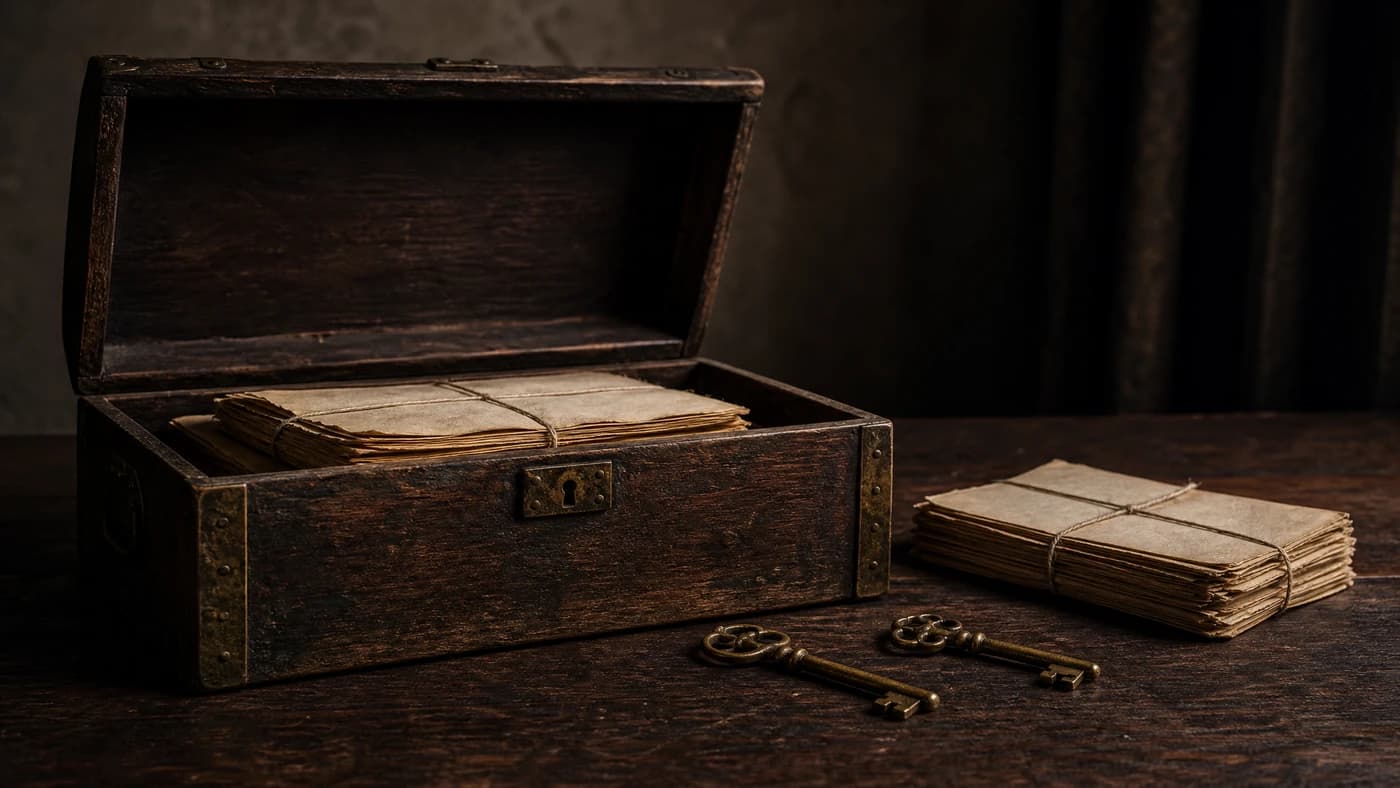
Situation: A person named Anna dreams that she is in a large, old house she doesn't recognize. She wanders through the rooms and finds a box full of old letters. As she reads them, she realizes they were written by herself in the past, but they contain advice she had forgotten. She wakes up with a feeling of nostalgia and a slight sadness.
Analysis:
- The House: In dreams, a house often symbolizes the Self. A large, old house can represent deep, unexplored parts of her past or her personality.
- The Old Letters: These symbolize forgotten memories, wisdom, or lessons from the past. The fact that they were written by herself emphasizes that the answers she seeks already exist within her.
- Advice from the Past: This is a direct message that Anna needs to return to her core values, to what she once knew or believed. Perhaps she has lost touch with herself or forgotten how to handle current challenges using her inner resources.
- Emotions (Nostalgia, Sadness): These emotions indicate a sentimental connection to the past and perhaps regret for having forgotten these lessons.
Interpretation: The dream suggests to Anna that she needs to revisit her past experiences, lessons, and inner guidance. Perhaps in her current life, she feels lost or is struggling with a problem for which she already possesses the solution but has forgotten it. The dream encourages her to reconnect with this inner wisdom and integrate the forgotten aspects of her personality.
Example 2: Animal Synchronicity
Situation: Georgi is contemplating changing his career. He feels unhappy in his current job but is afraid of the unknown. As he walks down the street, pondering, an owl flies in front of him, lands on a nearby tree, and looks directly at him. Georgi has never seen an owl so close in an urban environment.
Analysis:
- The Animal (Owl): The owl is a symbol of wisdom, intuition, night vision (the ability to see in the dark), and transformation.
- The Context (Urban Environment): The appearance of an owl in an urban setting is unusual, making the sign stronger and more urgent.
- The Behavior (Looking Directly): The owl doesn't just pass by; it makes eye contact, suggesting a direct message to Georgi.
- His Thoughts: The owl appears precisely at the moment he is considering a major life change and fears the unknown.
Interpretation: The appearance of the owl is a strong sign related to his dilemma. The owl may symbolize that he needs to use his inner wisdom and intuition to navigate through the "darkness" – the unknown of a new career. It is an encouragement to trust his deeper knowledge, despite his fear. It could also mean that transformation (a symbol of the owl) is inevitable or necessary at this time. The sign suggests that he has the ability to "see" the path ahead, even when it is unclear.
Example 3: Tarot Card Interpretation
Situation: Lyubov is seeking guidance about the future of her relationship. She does a three-card spread: 1. Past; 2. Present; 3. Future. The cards are: The Hermit in the past, Ten of Swords in the present, and Eight of Pentacles in the future.
Analysis:
- The Hermit (Past): The Hermit often symbolizes introspection, seeking inner wisdom, self-analysis, sometimes loneliness or a period of isolation. This could mean that previously, the relationship was in a period of personal growth or distancing, where each person was seeking themselves.
- Ten of Swords (Present): This card usually signifies an end, destruction, a painful conclusion, hitting rock bottom. In the context of a relationship, this could point to the end of a phase, great disappointment, a feeling of betrayal, or simply exhaustion.
- Eight of Pentacles (Future): This card indicates hard work, mastery, dedication to a craft or skill, improvement through practice. In the context of a relationship, it suggests that if they overcome the current difficult moment, the future will be built through focused work and effort. This could mean building a new foundation, improving communication, or rebuilding the relationship with significant effort.
Interpretation: The past phase of the relationship was dedicated to personal development and self-analysis (The Hermit). Now they have reached a difficult end or painful disappointment (Ten of Swords), which may mean the old form of the relationship has concluded. However, the future (Eight of Pentacles) offers the possibility of building something new and stronger, but this will require significant work, patience, and dedication from both partners. This is not passive waiting, but active participation in transforming the relationship.
Example 4: Repeating Numbers
Situation: Elena is in the process of making an important decision about moving to another city. For the past few weeks, she has been constantly noticing the number 5 everywhere – on clocks, prices in stores, car license plates, even in phone numbers.
Analysis:
- The Number 5: According to numerology, the number 5 symbolizes change, freedom, adventure, adaptability, but also instability and chaos.
- The Context (Decision to Move): Her decision to move is directly related to change and the pursuit of new freedom.
- The Repeating Frequency: The fact that the number appears so often indicates that this is not a coincidence, but a sign the Universe is sending her to draw her attention.
Interpretation: The repeating number 5 is a strong confirmation and guidance for Elena. It suggests to her that the change she is seeking is linked to the elements of the number 5 – more freedom, adventure, and the opportunity for a new perspective. The sign may also be a warning to be prepared for a degree of instability or unforeseen circumstances that come with such a major change. The main message is to embrace change and be adaptable.
Tables and Data
For better structure and understanding, here are a few tables summarizing common symbols and their possible meanings. It's important to remember that these are just starting points, and true interpretation always involves intuition and context.
Table 1: Basic Animal Symbols and Their Meanings
| Animal | Possible Meanings |
|---|---|
| Lion | Courage, strength, authority, leadership, self-assertion. |
| Bear | Strength, protection, parenthood, introspection (hibernation), healing. |
| Butterfly | Transformation, rebirth, beauty, lightness, emerging from a shell. |
| Elephant | Wisdom, strength, memory, patience, stability, connection to ancestors. |
| Sparrow | Joy, community, simplicity, adaptability, communication. |
| Turtle | Longevity, patience, protection, wisdom, stability, connection to Earth. |
Table 2: Element Symbols and Their Meanings
| Element | Symbolic Meaning | Associations |
|---|---|---|
| Fire | Transformation, passion, energy, action, destruction, enlightenment. | Mars, Sun, Leo, Aries, Sagittarius, action, will. |
| Water | Emotions, intuition, subconscious, purification, adaptability, flow. | Moon, Venus, Neptune, Cancer, Scorpio, Pisces, feelings. |
| Air | Intellect, communication, thoughts, ideas, freedom, movement. | Mercury, Uranus, Gemini, Libra, Aquarius, mind, communication. |
| Earth | Materiality, stability, fertility, body, nature, security. | Venus, Saturn, Taurus, Virgo, Capricorn, physical world, foundation. |
Table 3: Common Tarot Symbols (Arcana)
| Card | Key Symbols and Meanings |
|---|---|
| The Fool | New beginnings, faith, spontaneity, leap of faith, innocence, potential. Symbol of the journey. |
| The Magician | Willpower, creation, manifestation, using resources, mastery. Symbol of connecting to the divine. |
| The High Priestess | Intuition, subconscious, mystery, hidden knowledge, passivity, feminine energy. Symbol of hidden truths. |
| The Empress | Fertility, abundance, motherhood, nurturing, nature, sensuality. Symbol of feminine creative power. |
| The Emperor | Dominion, structure, authority, fatherhood, control, stability. Symbol of masculine creative power. |
| The Hierophant | Tradition, spiritual teachings, institutions, faith, counsel, conventionality. Symbol of the transmission of knowledge. |
| The Lovers | Choice, partnership, harmony, love, unions, moral dilemmas. Symbol of an important choice. |
| The Chariot | Victory, control, will, determination, journey, overcoming obstacles. Symbol of achievement through persistence. |
| Strength | Inner strength, courage, patience, compassion, control over instincts. Symbol of gentle power. |
| The Hermit | Introspection, truth-seeking, solitude, wisdom, inner guidance. Symbol of seeking light. |
| Wheel of Fortune | Cyclicality, destiny, change, luck, turning points. Symbol of inevitable changes. |
| Justice | Law, truth, cause and effect, fairness, balance, responsibility. Symbol of karmic balance. |
| The Hanged Man | New perspective, sacrifice, surrender, letting go of control, spiritual awakening. Symbol of changing viewpoints. |
| Death | Endings, transformation, transition, new beginnings, release from the old. Symbol of inevitable change. |
| Temperance | Balance, harmony, moderation, blending, patience, purpose. Symbol of integration. |
| The Devil | Addiction, materialism, bondage, limitations, base desires, obsession. Symbol of the illusion of powerlessness. |
| The Tower | Sudden change, destruction of false structures, awakening, liberation through chaos. Symbol of sudden realization. |
| The Star | Hope, inspiration, serenity, healing, faith, spiritual guidance. Symbol of light after the storm. |
| The Moon | Illusion, fear, uncertainty, subconscious, intuition, dreams. Symbol of the unseen and unclear. |
| The Sun | Joy, success, vitality, clarity, optimism, enlightenment. Symbol of truth and happiness. |
| Judgement | Reckoning, awakening, new beginnings, release, absolution. Symbol of being called to truth. |
| The World | Completion, achievement, integration, fulfillment, journey. Symbol of accomplishment and wholeness. |
Frequently Asked Questions
How can I distinguish a real sign from a coincidental match?
The difference often lies in the sense of significance and repetition. A true sign usually evokes a strong intuitive reaction, a feeling of an "Aha!" moment, or a sense that it's important for you at this time. Coincidental matches often go unnoticed or don't create a strong emotional or intuitive connection. If you notice the same symbol, number, or theme repeatedly in different contexts, it's a strong indicator of a sign.
Can signs be negative?
Signs themselves are neither good nor bad; they are messages. Some signs may warn us of potential dangers, difficulties, or mistakes. These "negative" signs often serve as valuable warnings, allowing us to take action, change course, or be better prepared. In divination, even the most challenging signs can lead to growth and positive transformation if understood correctly.
How can I improve my ability to interpret symbols?
Developing intuition is key. Practice regular meditation, mindfulness, and dream journaling. When you encounter a symbol, first connect with how it makes you feel. Then, use resources like books or online guides, but always filter the information through your own intuition and personal experience. Pay attention to synchronicities in your life and record them. With time, you will develop a deeper understanding.
Is there a universal "dictionary" of symbols?
There are common meanings and archetypal associations for many symbols that appear across different cultures. These universal meanings are helpful as a starting point. However, each symbol can take on a unique meaning for an individual based on their personal experiences, cultural background, and the specific context. There isn't a single "correct" dictionary; interpretation is always a dynamic process.
What does it mean if I constantly see the same number?
Constantly seeing the same number (e.g., angel numbers like 111, 222, 333) is generally considered a sign from the Universe or spiritual guides. These numbers carry specific vibrations and messages related to your current situation. For example, 111 is often associated with new opportunities and the rapid manifestation of thoughts, while 333 can symbolize support from spiritual guides. Pay attention to what you are thinking or doing when you notice the number.
What is the meaning of black and white colors in symbolism?
Black often symbolizes mystery, the subconscious, the unknown, protection, elegance, but it can also signify sadness, emptiness, or evil. White symbolizes purity, light, new beginnings, spirituality, peace, innocence, but can sometimes also mean emptiness or a lack of substance.
How do I interpret symbols I find in nature?
Observe carefully. What animal do you see? What is it doing? What is its state? How do you feel when you see it? The same applies to natural phenomena like rain, wind, or lightning. Connect the behavior or appearance of the symbol to your current situation and emotional state. Consider the traditional meanings of these elements, but always prioritize your intuitive feeling.
Can a fortune teller interpret my signs even if I haven't seen them?
Yes, a fortune teller can help interpret signs and symbols that you may have missed or not been aware of. Through various methods such as card readings, mediumistic channels, or intuitive insights, a fortune teller can perceive the energy or message connected to you and convey it in the form of understandable signs or symbols. This is part of a fortune teller's role as a guide and interpreter.
Conclusion
The journey through the world of signs and symbols in divination is endless and always enriching. These elements are not just tools for prediction, but rather a universal language through which the Universe, our subconscious, and our spiritual guides communicate with us. From subtle synchronicities in everyday life to the complex imagery in Tarot cards, each symbol carries the potential for deep insight and guidance.
Understanding these messages requires more than intellectual knowledge; it requires an open heart, heightened intuition, and a willingness to listen. As we have seen, context is paramount. The same symbol can carry different meanings depending on the situation, the individual, and the culture. Therefore, it is important to develop the ability for intuitive interpretation, which goes beyond literal meanings and enters the realm of energy and emotion.
Practicing mindfulness, keeping a dream journal, and constantly paying attention to what is happening around us are essential steps towards mastering this language. Each of us has an innate ability to recognize and understand these signs. Divination simply helps us unlock and sharpen this ability. Developing intuition is a process that pays dividends not only in divination but in all aspects of life, leading to a more fulfilling and conscious existence.
Remember that signs are not judgments, but opportunities. They can warn us of challenges, guide us on the right path, remind us of our strengths, or show us the way to growth and transformation. When we learn to read these messages, we gain a deeper connection with ourselves, with others, and with the vast world around us. This empowers us to live more consciously, make better choices, and navigate through life with greater confidence and wisdom.
Ultimately, the art of interpreting signs and symbols in divination is an invitation to a deeper understanding of life. It teaches us to see beyond the surface, to discover hidden meaning, and to live in harmony with universal rhythms. Whether you are using Tarot cards, observing nature, or simply being open to the signs in your daily life, you are already on the path to this beautiful and transformative art. Continue to explore, to learn, and most importantly – to listen to your inner voice.
This guide provides the basics, but true mastery comes with practice and personal experience. Be patient with yourself, honor your journey, and never stop seeking knowledge. The world is full of wisdom waiting to be discovered, and signs and symbols are its messengers. Embrace them with an open mind, and they will guide you on your path to deeper self-knowledge and understanding.
Important Information
Astrology is a tool for self-knowledge and reflection, not an exact science. The information in this article is for educational purposes and should not replace professional advice.
Екипът на Врачка
Професионални астролози и таро експерти
Ние сме екип от опитни астролози, таролози и нумеролози с над 15 години практика в окултните науки. Нашата мисия е да направим древната мъдрост достъпна и разбираема за всеки, който търси пътеводител в живота си.
Какво ви свързва наистина?
Синастрия - Съвместимост
Съвместимост между две натални карти. Любов, приятелство или бизнес партньорство.
Коментари
Готов за по-дълбоко разбиране?
Разгледай останалите ръководства или изследвай astrology.