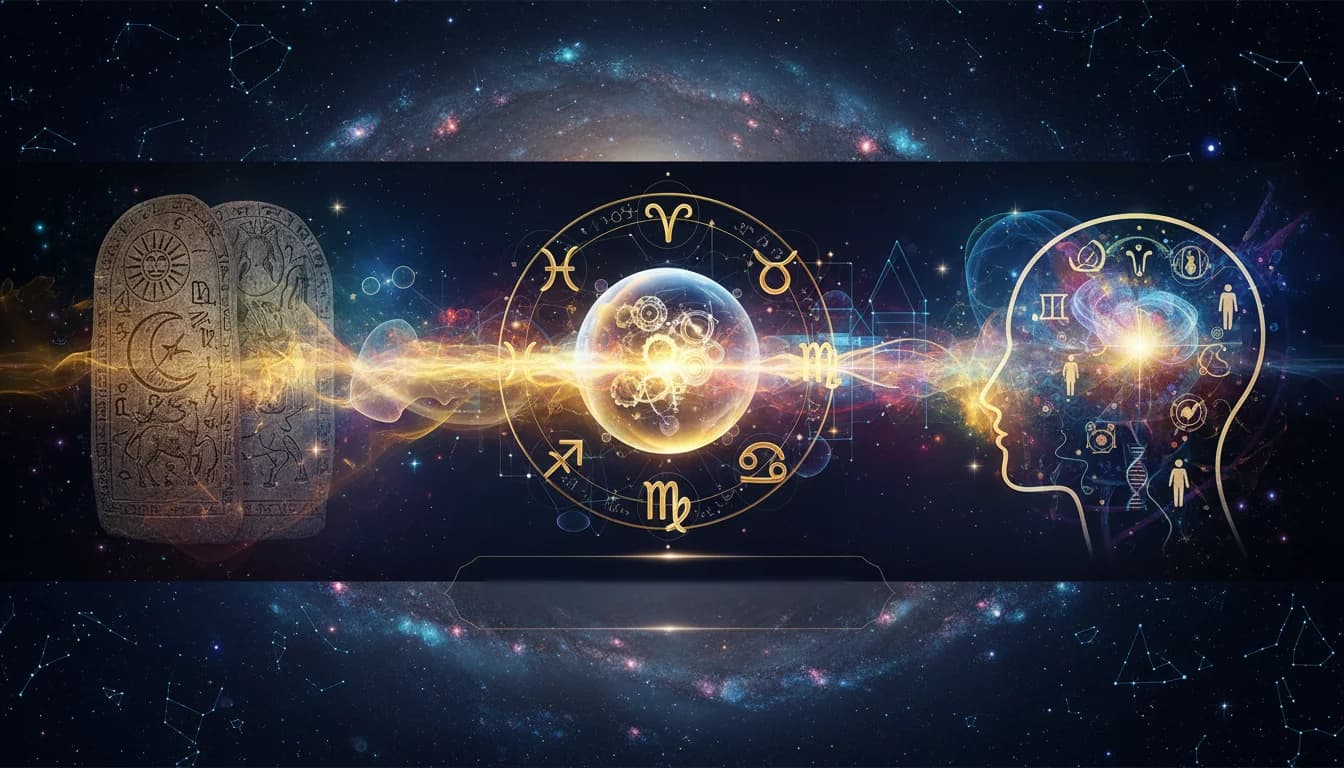
Астрология Ръководство
Еволюция на хороскопа: От древни предсказания до модерна психология
Слушай статията
Аудио версия
Генерирано аудио
Теорията е за всички. Твоята карта е само твоя - виж какво ѝ готви 2026.
Моят годишен отчет →Аудио версия
Човечеството винаги е търсило отговори в небето, а историята на хороскопа показва как се е променяло човешкото съзнание през вековете. От древните зикурати на Месопотамия до съвременните мобилни приложения, развитието на астрологията отразява стремежа ни да осмислим своето място във Вселената. Някога астрологията е била в ръцете на крале и императори, използвана за предсказване на глад, войни и съдбата на цели народи. Днес тя се е превърнала в средство за психологически анализ и личностно развитие, помагайки на хората да разберат по-добре своя вътрешен свят. За да използваш астрологията като сериозен инструмент за самопознание, е важно да разбереш този преход от фаталистични предсказания към архетипна психология.
Основни етапи в развитието:
Корените на днешния древен хороскоп откриваме в плодородната долина между Тигър и Ефрат. Около второто хилядолетие пр.н.е. вавилонските жреци-астрономи започнали систематично да записват движенията на планетите, вярвайки, че те изразяват волята на боговете. В този ранен етап астрологията не е била насочена към отделния човек, а към държавата. Наблюденията върху Венера или Марс са служели за прогнозиране на реколти, наводнения или изхода от предстоящи битки. Именно тук се заражда идеята за небесната кореспонденция – "това, което е горе, е подобно на това, което е долу".
Вавилонците са тези, които разделят еклиптиката на 12 равни части, полагайки основите на познатите ни зодиакални знаци. Те идентифицират планетите като божествени сили: Юпитер е бил свързван с Мардук, а Венера с Ищар. Без тези първични математически и митологични структури модерната астрология не би могла да съществува. През този период се появяват и първите прото-хороскопи, макар и те все още да са били далеч от сложните схеми, които познаваме днес.
Истинският напредък в развитието на астрологията настъпва след завоеванията на Александър Велики, когато вавилонските знания се срещат с гръцката геометрия и философия в Александрия. През този период (около 2-ри век пр.н.е. – 1-ви век сл.н.е.) се ражда хороскопната астрология в нейния завършен вид. Гърците въвеждат концепцията за "Асцендента" (изгряващия знак) и системата от 12-те дома, които представляват различните сфери на човешкия живот – от личните финанси до брака и кариерата.
Текстове на автори като Клавдий Птолемей (неговият труд "Тетрабиблос") и Ветий Валенс систематизират знанието за планетите и техните аспекти. Тук хороскопът става личностен – вече не се предсказва само бъдещето на царя, но и съдбата на обикновения човек въз основа на точния момент на неговото раждане. Този период утвърждава четирите елемента (огън, земя, въздух, вода) като основни за тълкуването на темперамента – концепция, която по-късно ще залегне в основата на психологическото профилиране.
| Епоха | Основен фокус | Ключов принос |
|---|---|---|
| Вавилонска | Мунданна (държавна) астрология | Зодиакален кръг, ефемериди |
| Елинистическа | Индивидуална съдба | Асцендент, 12 дома, аспекти |
| Средновековна | Прецизна прогноза | Арабски точки, сложни изчисления |
| Модерна | Психологическо израстване | Архетипи, свободна воля |
След западането на Римската империя, центърът на астрологичната мисъл се премества в ислямския свят. Освен че превеждат и съхраняват гръцките текстове, арабските учени значително ги надграждат. Те развиват изключително сложни математически методи за изчисление на планетарните позиции и въвеждат т.нар. "Арабски точки" (като Точката на Щастието), които добавят нови нива на интерпретация при изследването на произхода на хороскопа.
Средновековната астрология е била изключително детайлна и технична. Автори като Абу Машар и по-късно европейски астролози като Гуидо Бонати са използвали небесната карта за решаване на конкретни въпроси – от намиране на изгубени вещи до определяне на най-подходящия момент за започване на война. Това е ерата на "Хорарната астрология", където небето се разглежда като прецизен механизъм, даващ директни отговори на земни въпроси.
През епохата на Ренесанса астрологията достига върха на своето социално влияние. Тя се преподава в най-престижните европейски университети и е тясно свързана с медицината. От всеки лекар се е очаквало да познава фазите на Луната и позициите на планетите, преди да предприеме каквото и да е лечение. Големи учени като Йоханес Кеплер и Исак Нютон са били обучени в астрологията, като Кеплер дори е печелел прехраната си, изготвяйки хороскопи за благородници.
Въпреки това, появата на хелиоцентричния модел и научната революция започват да поставят под въпрос геоцентричния характер на астрологията. Постепенно дебатът за научния статут на астрологията се изостря и дисциплината е изтласкана от академичните среди в областта на окултизма и фолклора. През 18-ти и 19-ти век настъпва период на "зимен сън" за астрологията, оцеляла само в тайни общества и народни календари, преди да дойде времето за нейното радикално прераждане.
Истинската еволюция на астрологията към модерната епоха започва с работата на швейцарския психиатър Карл Густав Юнг. Той преоткрива астрологията като символен език на човешката психика, вместо просто метод за предсказване на външни събития. Юнг въвежда концепцията за синхроничността – смислено съвпадение между вътрешно състояние и външно събитие, което не е свързано причинно-следствено.
Този преход е фундаментален. Вместо да питаме "Какво ще ми се случи?", ние започваме да питаме "Кой съм аз и какъв е моят потенциал?". Психологическата астрология разглежда планетите като вътрешни функции на личността: Марс е нашата способност да се заявяваме вместо обикновен "войн", а Венера е ценностната ни система и начин на свързване, далеч отвъд образа на "любовник". Тази промяна превръща хороскопа в инструмент за терапия и самоусъвършенстване.
| Планета | Древно тълкуване (Събитие) | Модерно тълкуване (Психология) |
|---|---|---|
| Сатурн | Нещастие, загуба, смърт | Дисциплина, граници, страх, структура |
| Юпитер | Богатство, късмет, кралска милост | Експанзия, вяра, смисъл, оптимизъм |
| Меркурий | Търговия, пътуване, крадци | Комуникация, мисловен процес, възприятие |
| Марс | Война, насилие, инциденти | Воля, енергия, сексуалност, гняв |
През втората половина на 20-ти век астролози като Дайн Ръдиар и Лиз Грийн доразвиват идеите на Юнг, създавайки това, което днес познаваме като психологическа астрология. Основната теза е, че характерът ти е съдба. Ако разбереш своите вътрешни конфликти и динамики, можеш да промениш начина, по който преживяваш външните обстоятелства. Това е радикално отклонение от фатализма на древните, които са вярвали, че звездите диктуват неизбежен край.
В съвременната практика хороскопът се използва като пътна карта на душата. Той не те ограничава, а ти показва спектъра от възможности. Например, един труден аспект между Сатурн и Луната в наталната карта вече се тълкува като психологическа нужда от изграждане на емоционална устойчивост и самодостатъчност, а не като "лоша майка" или "бедност". Този подход ти дава сила да поемеш отговорност за живота си.
С навлизането на компютрите и интернет, модерната астрология претърпя още една метаморфоза. Изчисленията, които преди отнемаха часове с логаритмични таблици, сега се извършват за милисекунди от софтуер. Това направи астрологията достъпна за милиони хора по света. Появиха се мобилни приложения, които предлагат ежедневни транзити и персонализирани анализи, базирани на алгоритми.
Макар технологията да улеснява достъпа, тя носи и риск от повърхностно разбиране. Масовите хороскопи по списанията често редуцират сложната материя до 12-те слънчеви знака, което е далеч от дълбочината на професионалния анализ. Въпреки това, дигиталната епоха позволи възраждането на древни техники, забравени в продължение на векове, съчетавайки ги с модерната лекота на комуникация.
Днес сме свидетели на интересен феномен – завръщане към корените. Съвременните астролози все по-често използват комбинация от елинистически техники (като профекции и фирдарии) и психологически анализ. Този синтез позволява едновременно да разбереш вътрешната си мотивация и да определиш периоди на активност или предизвикателства във външния свят.
Бъдещето на астрологията лежи в тази интеграция. Хороскопът вече е сложна система за навигация в един несигурен свят, а не просто предсказание за "висок тъмен непознат". Тя ти помага да намериш смисъл в хаоса, свързвайки личния си цикъл с големите цикли на планетите, което носи усещане за принадлежност към нещо по-голямо от теб самия.
В днешно време астрологията се разглежда по-скоро като символен език или хуманитарна дисциплина. Тя използва астрономически данни за психологически и философски анализи.
Древният хороскоп се е фокусирал върху външни събития и съдбата, докато модерният набляга на психологията, характера и личния избор.
Броят 12 е наследство от Вавилон. Там еклиптиката е била разделена на 12 сегмента от по 30 градуса, които съответствали на 12-те лунни месеца в годината.
В традиционната астрология са съществували подобни техники. Въпреки това, съвременната етична астрология категорично избягва такива предсказания, като се фокусира върху качеството на живота.
Карл Юнг въвежда концепциите за архетипите и синхроничността. Това позволява на астрологията да се утвърди като инструмент за психологическо изследване.
Асцендентът е изгряващият знак на източния хоризонт в момента на твоето раждане. В модерната астрология той символизира твоята социална маска и начина, по който светът те вижда.
Астрономически, съзвездията наистина са се изместили заради прецесията. Но западната тропическа астрология използва фиксирана координатна система, която се базира на равноденствията, а не на реалните съзвездия.
Наталната карта е "снимка" на небето в точния момент и място на твоето раждане. Тя служи като база за всеки хороскоп.
Да, чрез анализ на 10-ти дом и позицията на Сатурн и Юпитер, могат да се идентифицират най-подходящите сфери за твоя професионална реализация.
Причината е, че те се базират само на Слънчевия знак. Така игнорират останалите 9 планети и домовете, които са уникални за всеки човек.
Еволюцията на хороскопа е доказателство за адаптивността на човешкия дух. От страхопочитанието пред небесните богове до дълбокото вглеждане в собствената ни душа, астрологията продължава да бъде мост между небесното и земното. Независимо дали я възприемаш като мистична традиция или като психологически инструмент, тя предлага уникална перспектива към смисъла на твоя живот. В Vrachka.eu вярваме, че познаването на тази история те прави по-съзнателен участник в собствената ти съдба. Ако искаш да разбереш повече за себе си, започни със запознаване с зодиакалните знаци и планетите в собствената си карта. Звездите не те принуждават; те те канят да откриеш най-добрата версия на себе си.
Редакционен екип на Vrachka.eu
Съдържанието в Космическата Библиотека се създава от редакционния екип: AI асистира с проучване и чернова, а всеки материал се преглежда и редактира за точност спрямо традиционни астрологични източници. Не публикуваме непроверено AI съдържание.
Какво ти предстои тази година?
Соларно завръщане, профекции, ключови дати и месечна прогноза за цялата 2026.
Сигурно плащане · не резонира ли с теб - връщаме парите до 14 дни
Разгледай останалите ръководства или изследвай астрология.
Разгледай още ръководства от категория Гидове

Историята на хороскопа проследява пътя от древните вавилонски звездобройци до съвременната астрология. Разгледайте еволюцията на астрологията през различни цивилизации, от Египет и Гърция до Средновек
TLDR: Детският хороскоп е мощен инструмент за разбиране на уникалната личност, таланти и предизвикателства на едно дете, като му помага да развие своя пълен потенциал. Анализирайки наталната карта на
Резюме: Тази статия разглежда ключовите етични принципи, които трябва да ръководят практикуващите ясновидци и гадатели, за да осигурят почтеност, уважение и благополучие за своите клиенти. Обсъждат се