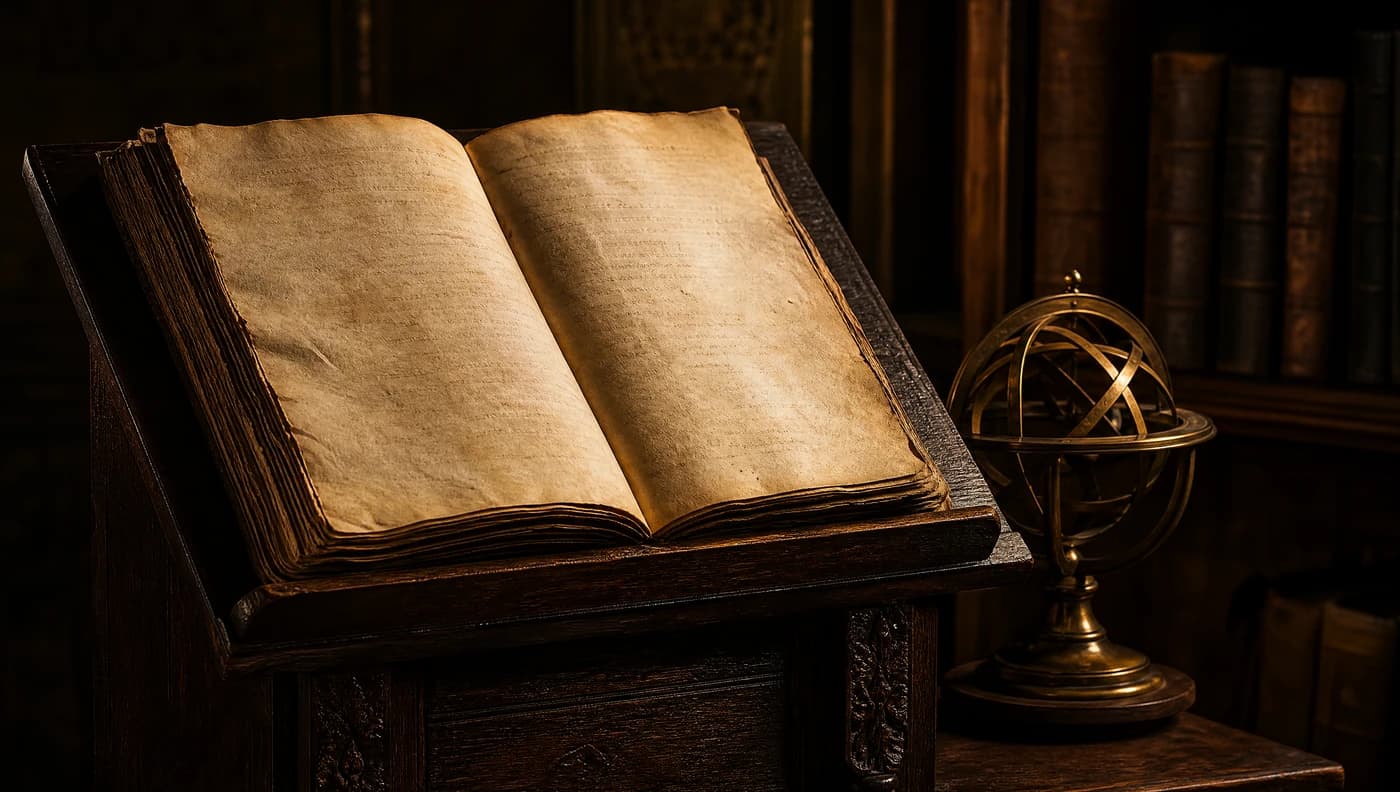
Medieval Astrology: Discovering New Horizons
Medieval Astrology in Brief
Medieval astrology is a key stage that combined ancient knowledge with new ideas, changing our understanding of planetary influences. It laid the foundations for modern astrology, offering valuable insights for self-knowledge and predicting the future. This period reveals how astrology was a respected science and a powerful tool for understanding life.
Medieval astrology is an important period in the development of astrological thought, which combines ancient knowledge with new philosophical and scientific concepts. It laid the foundations for modern astrology by deepening the understanding of planetary influences, houses, and aspects, and applying them to the sphere of human life and destiny. This period witnessed the flourishing of astrology as a respected science and a tool for prediction and self-knowledge.
Medieval Astrology: Discovering New Horizons
Medieval astrology represents one of the most dynamic and significant periods in the long and rich history of stellar science. The period, spanning approximately from the 5th to the 15th century, was a time of transmission, translation, and synthesis of ancient knowledge preserved by the Babylonians, Egyptians, Greeks, and Romans. It was an era when astrology was not merely a form of divination but a respected discipline, closely linked to medicine, philosophy, theology, and even state governance. Medieval astrologers were not just predictors but also scholars who sought to understand the cosmic order and its reflection in human life. They developed and systematized many concepts that form the basis of the modern history and evolution of the horoscope, such as the in-depth interpretation of planets in the natal chart, houses, and aspects between celestial bodies. The study of medieval astrology opens a window into a world where the heavens were literally a map of destiny, and understanding their dynamics was key to achieving harmony, health, and well-being. It teaches us patience, observation, and deep respect for the cosmic cycles that govern our world. Furthermore, medieval astrology laid the foundation for a more systematic application of astrology in specific areas of life, such as paving the way for topics like the business horoscope and understanding individual life paths through the destiny number. This guide will take you through the key aspects of medieval astrology, its fundamental principles, its most influential figures, and its lasting legacy.
On Vrachka.eu, you will find in-depth analyses of medieval astrology that reveal its secrets and significance.
The Roots of Medieval Astrology: A Legacy from Antiquity
Before delving into the specifics of the medieval period, it is important to understand that it did not appear in a vacuum. Medieval astrology is a direct heir to the rich traditions that originated in ancient civilizations. Babylonian astrology, with its focus on observing celestial bodies and predicting events, laid the foundations for the zodiac and planetary influences. The Egyptians contributed their understanding of cyclicality and the connection between celestial movements and earthly events. Greek astrology, especially during the Hellenistic period, introduced the concept of the natal chart, which represents the celestial configuration at the moment of birth, as well as the development of zodiac signs and their characteristics. The Romans adopted and spread Greek astrology, adapting it to their needs and integrating it into their cultural life. A key figure from this transitional period is Ptolemy, whose works like "Tetrabiblos" remained foundational for astrology for centuries. He systematized planetary influences, zodiac signs, houses, and aspects, creating a framework that medieval astrologers would further develop. The influence of Greco-Roman culture was strongly felt in the early Middle Ages, with many of these texts being preserved and translated thanks to Arab scholars. This ensured continuity and allowed astrological thought to pass through the turbulent times of the Roman Empire's decline and re-emerge in a new form in the following centuries. Understanding these ancient roots is essential for appreciating the complexity and depth of medieval astrology, which built upon existing foundations, enriching them with new philosophical and theological perspectives.
Translation and Preservation: The Role of the Arab World
One of the most significant contributions to the preservation and development of astrology during the Middle Ages came from the Arab world. After the decline of the Western Roman Empire, many Greco-Roman texts on astrology were lost or forgotten in the West. Arab scholars, however, showed immense interest in ancient wisdom. They actively translated works on astronomy, mathematics, and astrology from Greek, Syriac, and Persian into Arabic. Constantinople remained an important center for preserving Greek heritage, but it was the Arab caliphates, especially during the Golden Age of Islam (8th-13th centuries), that became the main drivers of astrological science. Cities like Baghdad, Cairo, and Cordoba became centers of scientific research, where astrology was studied alongside astronomy, medicine, and other sciences. Arab astrologers not only translated but also systematized, commented on, and further developed ancient teachings. They introduced new techniques, such as more complex methods for calculating planetary positions, and developed new astrological schools and approaches. Important figures like Al-Kindi, Al-Battani, Abu Ma'shar Ja'far, and Al-Biruni left a significant legacy in the field of stellar science. Their works, often based on a synthesis of different traditions, became the foundation upon which medieval European astrologers would build. In the 12th and 13th centuries, with the re-establishment of connections between Europe and the Arab world, many of these Arabic translated texts began to be translated into Latin. This process of translation from Arabic to Latin was crucial for the revival of astrology in Western Europe and its integration into European intellectual life. Without this key stage of translation, preservation, and development by Arab scholars, medieval astrology in Europe would likely not have reached its flourishing state.
Astrology in the Early Middle Ages (5th-10th Century): Transition and Survival
The early Middle Ages, often referred to as the "Dark Ages," was a period of significant political and social upheaval in Europe. The fall of the Western Roman Empire led to fragmentation, loss of knowledge, and the decline of scientific institutions. Nevertheless, astrology did not disappear entirely. It survived in monasteries, where monks preserved and copied ancient manuscripts, including those related to astrology. Astronomy and astrology were often viewed as a whole, as part of the study of the "liberal arts." Calendar calculations, the determination of Easter and other religious holidays, as well as the need to make forecasts for agricultural activities, kept the interest in celestial bodies alive. Although astrology was likely not as popular or widely practiced as in the Roman era, it continued to exist as part of the intellectual heritage. The influence of early Christian theology also played a role. While some church authorities viewed astrology with suspicion as a form of paganism or fatalism, others found ways to integrate it into Christian cosmology, seeing celestial bodies as created by God and carrying specific meanings. During this period, in Western Europe, astrology was often mixed with folk beliefs and practices. However, thanks to the efforts of monks and scholars who preserved and studied ancient texts, the basic principles of astrology were maintained. The translations from Arabic, which began to enter Europe in the late early Middle Ages, would give new impetus to its development in the following centuries, opening the door to a new flourishing.
The Rise of Astrology in the Late Middle Ages (11th-15th Century)
The Late Middle Ages marked a true renaissance of astrology in Europe. With the revival of trade, cities, and universities, intellectual life intensified. The translations of Arabic astrological works into Latin, carried out in centers like Toledo and Salerno, made extensive knowledge, preserved and developed by Arab astrologers, accessible to European scholars. This led to the creation of new astrological schools and increased interest in astrology among academics, as well as among the aristocracy and ordinary people. Astrology became an integral part of university education. It was studied alongside astronomy, mathematics, and medicine. Many of the great minds of the era, including Thomas Aquinas, Roger Bacon, and Johannes Müller (Regiomontanus), engaged with astrological matters. Medieval astrologers used astrology for a wide range of purposes: from predicting events, compatibility of marriages, to choosing auspicious times for important undertakings (known as "electional astrology"). Medical astrology, which linked health conditions and treatment choices to the positions of planets and stars, became particularly popular. Astrology was also used for political purposes, with many rulers and advisors relying on astrological forecasts for important decisions. The development of the printing press in the 15th century further accelerated the dissemination of astrological knowledge. The first astrological almanacs and treatises appeared, reaching a wider audience. This was a time of intense development of astrological theory and practice, which laid the foundation for the modern natal chart and its interpretations. The period of the Late Middle Ages was crucial for the integration of astrology into European culture and science, before the subsequent changes brought by the Renaissance and the Enlightenment.
Key Concepts in Medieval Astrology
Medieval astrology built upon and systematized many of the concepts inherited from antiquity, while also introducing its own nuances. Understanding these fundamental elements is key to grasping the medieval astrological worldview:
Planets
Medieval astrologers worked with the seven classical planets: the Sun, Moon, Mercury, Venus, Mars, Jupiter, and Saturn. Each planet had its specific meanings, associated with certain qualities, energies, and areas of life. These meanings were interpreted as "good" (benefic) or "bad" (malefic), depending on the planet and its aspects. For example, Jupiter and Venus were considered benefic, while Mars and Saturn were considered malefic. The Moon was particularly important, as it represented emotions, instincts, and daily life, while the Sun was a symbol of vitality, essence, and personality. These planetary meanings are the basis for understanding planetary influences in any horoscope.
Zodiac Signs
The twelve zodiac signs (Aries, Taurus, Gemini, Cancer, Leo, Virgo, Libra, Scorpio, Sagittarius, Capricorn, Aquarius, Pisces) were viewed as cosmic "regions" through which the planets passed. Each sign carried its own characteristics, related to elements (fire, earth, air, water), qualities (cardinal, fixed, mutable), and specific influences on personality and events. The position of the Sun in a particular sign at birth determines a person's zodiac sign, but medieval astrologers paid equal attention to all planetary positions in the signs. The study of zodiac signs was central to understanding individuality.
Houses
The system of twelve houses, representing different areas of life (personality, finances, communication, home and family, creativity, work, partnerships, transformation, philosophy, career, friendships, the unconscious), was fundamental. Medieval astrologers used different house systems (such as equal houses or time-divided houses), but the basic idea was that any planet or sign located in a particular house exerted an influence on the corresponding sphere of life. Understanding the houses in the natal chart was essential for the specific interpretation of a horoscope.
Aspects
Aspects are angular relationships between planets that indicate how their energies interact. Medieval astrologers used the main aspects such as conjunction (0°), opposition (180°), trine (120°), square (90°), and sextile (60°). These aspects were interpreted as harmonious (trine, sextile) or tense (square, opposition), with the conjunction being able to be either harmonious or tense, depending on the planets. The analysis of aspects was key to understanding the dynamics and challenges in a person's life.
Allegories and Symbolism
Medieval astrology was heavily influenced by allegorical thinking. Planets, signs, and houses were often associated with mythological figures, deities, and archetypes. This added depth and layers to interpretations. Understanding astrological symbols and language was crucial for any practicing astrologer.
Famous Astrologers and Their Contributions
The medieval period gave the world numerous brilliant astrologers whose works continue to be studied today. Their insights and methods shaped the development of astrology:
- Abu Ma'shar Ja'far ibn Muhammad al-Balkhi (787–886): Often called the "King of Astrology," he was a Persian astrologer whose works were extremely influential. His treatises, such as "The Book of Introductions to Astrology" and "The Great Book of Events," were translated into Latin and had a profound impact on European medieval astrology. He systematized many techniques for predicting future events.
- Abu Ali al-Husayn ibn Sina (Avicenna) (c. 980–1037): Although better known as a physician and philosopher, Avicenna also wrote on astrological matters, often linking astrology with medicine. He emphasized the connection between celestial bodies and human health, contributing to the development of medical astrology.
- Al-Biruni (973–1048): This exceptional figure was a Persian scholar, mathematician, astronomer, and historian. His works, such as "The Book of the Foundations of Astrology," demonstrate a deep understanding of astrology combined with a critical scientific approach. He explored the relationship between astrology and other sciences.
- Johannes Müller (Regiomontanus) (1436–1476): A German mathematician and astronomer, he was one of the key figures in the transition from medieval to Renaissance astrology. Regiomontanus worked on more accurate astronomical tables and created the "Tables of Directions," which were used for predicting future events. He was known for providing astrological consultations.
- Guido Bonatti (13th Century): An Italian astrologer who wrote one of the most comprehensive astrological treatises of the Middle Ages – "Liber Astronomiae." He covered almost all aspects of astrology, from natal to electional and meteorological astrology.
These and many other astrologers left behind a valuable legacy that continues to be studied and interpreted. Their works demonstrate the depth of thought and complexity of astrological practices during the Middle Ages.
Astrology as Science and Art
For medieval thinkers, astrology was both a science and an art. It was a "science" in the sense that it was based on observations, mathematical calculations, and systematized principles. Astrologers used complex astronomical instruments like the astrolabe to calculate planetary positions and create charts. They followed strict rules and interpretation methods based on ancient texts and their own observations. At the same time, astrology was also an "art" that required intuition, creativity, and the ability to synthesize information. Interpreting a natal chart was not just a mechanical application of rules but a deep understanding of human nature and the cosmic order. Astrologers sought to see the "big picture," the harmony between the microcosm (human) and the macrocosm (universe). This connection between science and art is what makes medieval astrology so captivating. It was a tool for understanding the world and humanity's place in it, offering a framework for meaning and direction. In this sense, medieval astrology was part of a broader cosmological vision, where everything is interconnected and nothing happens by chance. It offered solace, guidance, and the possibility of self-discovery, similar to modern approaches for using astrology for self-discovery.
Medical Astrology: Health Under the Stars
One of the most important areas of application for medieval astrology was medicine. Medical astrology was closely linked to the understanding that the human body is a microcosm, reflecting the macrocosm of the universe. Medieval physicians were often also astrologers who used astrological knowledge to diagnose illnesses, predict their progression, and determine the most auspicious time for treatment. Every organ, every part of the body, every disease was associated with specific planets, signs, and houses. For example, Mars was associated with fire, inflammation, and injuries, while the Moon was linked to bodily fluids and emotional states. Similarly, each zodiac sign was associated with a specific part of the body – Aries with the head, Taurus with the neck, and so on. Choosing the best time to administer medical procedures, such as bloodletting, taking herbs, or performing surgery, was crucial. The astrologer had to consider the positions of the planets, their aspects, and the phases of the Moon to determine a "good" or "bad" moment for medical intervention. Medical astrology was integrated into the training of physicians and was widely practiced for centuries. It represents an important aspect of the medieval worldview, where celestial influences were seen as an inseparable part of human health and well-being. Although it is not practiced in the same form today, it shows how astrology was used for practical purposes related to the care of body and soul.
Electional Astrology: Choosing Auspicious Timing
Electional astrology was another extremely important branch of medieval stellar science. Its purpose was to determine the most auspicious moment to begin a new undertaking, whether it be a wedding, building a house, starting a journey, signing a contract, or performing an important ceremony. The idea was that by choosing a moment when the celestial configurations were harmonious and supportive of the specific intention, the success of the undertaking would be more likely. Medieval astrologers spent considerable time calculating and analyzing horoscopes for timing. For example, when choosing a wedding date, they would aim for positions of Venus and Jupiter, planets of love and luck, and avoid tense aspects to Mars (symbol of conflict) or Saturn (symbol of limitations). When building a new house, electional astrology would recommend a time when planets associated with earth and stability (like Taurus and Saturn) were in favorable positions. This approach demonstrates a deep belief in humanity's ability to influence its destiny by synchronizing with cosmic rhythms. Electional astrology was useful not only for personal but also for public undertakings, such as choosing the time for a king's coronation or for initiating a war. It demonstrates the pragmatic approach of medieval astrologers to using stellar science to achieve specific goals and avoid undesirable consequences, which is also related to the principles of the business horoscope.
Challenges Facing Medieval Astrology
Despite its popularity and widespread dissemination, medieval astrology was not without its challenges and criticisms. The main tension came from the Church. While some theologians accepted astrology as a reflection of God's order in the universe, others saw it as a form of paganism, superstition, or even heresy. The interpretation of astrology as absolutely deterministic, which contradicted the Christian idea of free will, was particularly problematic. This led to periods of bans and persecutions against astrologers. Another challenge was related to the quality of astrological knowledge. Despite the presence of highly qualified astrologers, there were also a large number of charlatans and incompetent practitioners who discredited the profession. Inaccuracies in astronomical calculations and different methods for calculating horoscopes were also a source of dispute. At the end of the Middle Ages, with the advent of the Renaissance and the Scientific Revolution, astrology began to lose some of its scientific status. The development of the heliocentric system by Copernicus and new astronomical discoveries gradually began to undermine traditional astrological models. Despite these challenges, medieval astrology managed to leave a lasting mark on the history of European thought and culture, continuing to inspire even today.
The Legacy of Medieval Astrology
Medieval astrology has left an indelible mark on the history of stellar science and culture as a whole. It served as a bridge between ancient civilizations and the modern world, preserving, translating, and developing valuable knowledge. Many of the fundamental principles and techniques used in modern astrology have their roots precisely in the medieval period. This includes the in-depth understanding of planetary meanings, zodiac signs, houses, and aspects, as well as methods for prediction and electional astrology. Medieval astrologers were pioneers in systematizing astrological knowledge and applying it to various aspects of human life – from health and medicine to politics and personal relationships, paving the way for topics like synastry and transits. Although astrology has undergone significant changes over the centuries, especially with the advent of the Renaissance and the Enlightenment, its medieval legacy remains visible. Modern astrologers who study classical texts often discover profound insights and techniques that can enrich their practice. Medieval astrology reminds us of a time when the stars were seen as a living map of the universe, and understanding them was the key to harmony and wisdom. It teaches us patience, observation, and deep respect for the cosmic forces that shape our lives. Studying this period helps us better understand the evolution of astrological thought and its place in the history of human knowledge. It is an important part of the history and evolution of the horoscope and continues to inspire those seeking answers.
Frequently Asked Questions
What is the main difference between medieval and modern astrology?
The main difference lies in focus and methodology. Medieval astrology was more deterministic, heavily focused on predicting events, and often integrated with medicine and theology. Modern astrology, especially psychological astrology, emphasizes self-discovery, personal development, and understanding inner motivations, viewing astrology as a tool for awareness rather than an absolute forecast.
Why was medieval astrology so closely linked to medicine?
In the medieval worldview, humanity (the microcosm) was seen as a reflection of the universe (the macrocosm). It was believed that health conditions and illnesses were directly connected to the positions of planets and stars. Medical astrology was used for diagnosis, prognosis, and determining the best time for treatment, making the connection between the two disciplines natural.
What were the most influential astrological texts during the Middle Ages?
Some of the most influential texts include Ptolemy's "Tetrabiblos" (which served as a foundation), works by Arabic astrologers like Abu Ma'shar ("The Great Book of Events") and Al-Biruni, as well as European treatises like Guido Bonatti's "Liber Astronomiae" and the works of Regiomontanus. These texts were translated and studied for extended periods.
What was the Church's stance on medieval astrology?
The Church's attitude was mixed. Some church authorities supported astrology as part of God's order, while others criticized it as superstition, paganism, or fatalism that contradicted free will. This led to periods of tension and occasional prohibitions, but astrology was never completely removed from European culture.
What were the main planets used in medieval astrology?
Medieval astrologers worked with the seven classical planets: the Sun, Moon, Mercury, Venus, Mars, Jupiter, and Saturn. These planets were considered the primary drivers of events and influences in people's lives and the world.
What is "electional astrology" and why was it important?
Electional astrology is a technique used to determine the most auspicious time to begin a new endeavor—from a wedding to building a house or embarking on a journey. The goal was to synchronize the action with harmonious celestial configurations to increase the chances of success and avoid undesirable consequences.
How did medieval astrologers arrive at their predictions?
They used a combination of methods, including analysis of natal charts, transits (the movement of planets relative to the birth chart), directions (symbolic movement of planets over the years), and other predictive techniques. These methods were based on complex calculations and a deep understanding of astrological symbols and their interactions.
Can medieval astrology be considered a science?
Within the context of medieval understanding, yes, it was considered a science as it was based on observations, mathematical calculations, and systematized rules. However, modern scientific standards do not classify it as an exact science, but rather as a system of beliefs and symbolic interpretations.
Important Information
Astrology is a tool for self-discovery and reflection, not an exact science. The information in this article is for educational purposes and should not replace professional advice. Every individual is unique, and astrological interpretations are general guidelines, not absolute truths.
Екипът на Врачка
Професионални астролози и таро експерти
Ние сме екип от опитни астролози, таролози и нумеролози с над 15 години практика в окултните науки. Нашата мисия е да направим древната мъдрост достъпна и разбираема за всеки, който търси пътеводител в живота си.
Какво ви свързва наистина?
Синастрия - Съвместимост
Съвместимост между две натални карти. Любов, приятелство или бизнес партньорство.
Коментари
Готов за по-дълбоко разбиране?
Разгледай останалите ръководства или изследвай астрология.