























Slava Sevryukova's Predictions for 2025-2030: What We Can Already Check
Ivo Lozenski's diaries state that science will reach its peak between 2025 and 2030, followed by stagnation. We are living in this window. We checked the dates, the books, and what can already be measured.
In this article10 parts
In brief: The third volume of Ivo Lozenski's diaries states that science and technology will reach their peak between 2025 and 2030, followed by a long period of stagnation. We are living right in this window. We reviewed what is written about 2025, 2050, 2075, and 2100, and compared it with verifiable data: some claims can already be measured, while others will be left for our grandchildren to see.
- Slava Sevryukova was born in December 1902 in Nova Zagora and passed away on April 10, 1991, in Sofia at the age of 88.
- The predictions were published in books by Assoc. Prof. Ivo Lozenski between 2012 and 2017, more than 20 years after her death.
- The years 2025, 2050, and 2075 come from a simple breakdown: the century after 2000 divided into quarters.
- The drop in birth rates is already visible in statistics. A Europe without armies is currently heading in the opposite direction.
There is an apparent paradox in the predictions for 2025 to 2030. The forecast most widely shared this autumn promises a climax in scientific discovery. Its most intriguing part, however, is the second half: after the peak comes stagnation. The real test begins in the years after 2030. That is why it is worth reading closely right now, while this period is unfolding.
The prompt for this article is an episode on the YouTube channel "Saznanie" (Consciousness), published on September 25, 2026, titled "Slava Sevryukova's Visions for 2025-2030 and the Path of Humanity." We watched it and verified every claim that can be tested: dates, books, publishers, numbers. Most of them checked out. Two did not quite hold up, and we cover those below.
Who Was Slava Sevryukova
Slava Sevryukova was born on December 5, 1902, Old Style (December 18, New Style) in Nova Zagora. Her surname came from her husband, Stepan Sevryukov, a White Russian emigre from Kharkiv wounded during the Russian Civil War. She married very young. She lived in Sofia, in the Ovcha Kupel district, and for decades remained known only to a close-knit circle. People around her described her as someone hard to reach: she chose who she spoke with.
Widespread recognition came only after 1989, when topics like clairvoyance and "hidden human faculties" moved from private living rooms to newspaper headlines. She died on April 10, 1991. The video claims she was 89 years old. According to the calendar, she was 88: her 89th birthday was still eight months away.
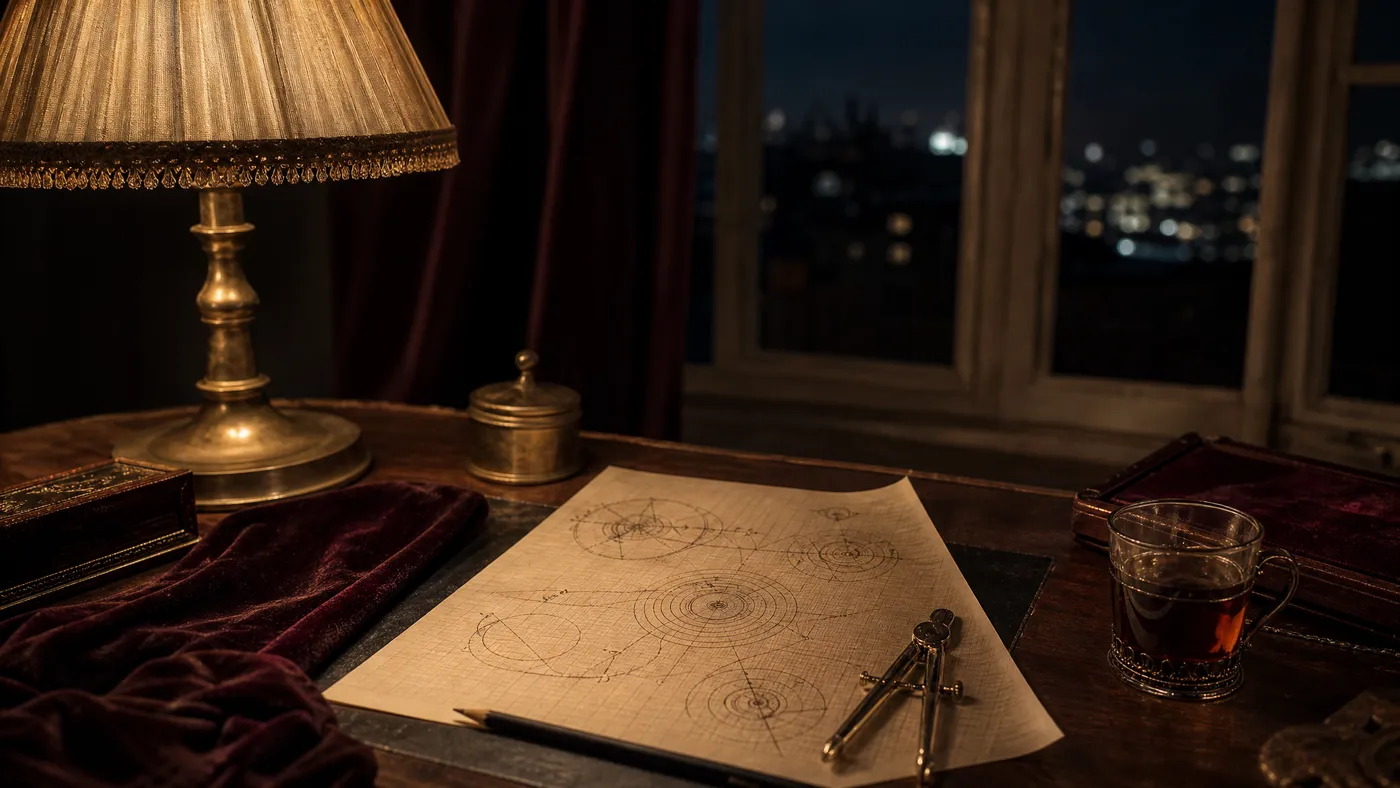
In February 1962, she met Assoc. Prof. Ivo Lozenski, a geophysicist. From 1963 until her death, the two conducted sessions they called psychotronic. The procedure was always the same: Lozenski posed questions, Sevryukova described what she "saw" in the microworld, and he wrote down her words and drew diagrams. This gave rise to her nickname, "the microscope woman."
In 1991, the year she died, Sofia University Press "St. Kliment Ohridski" published their joint monograph, "Psychotronic Studies of the Microworld." The entry exists in the Sofia City Library catalog, confirming the book's authenticity. It describes an atomic model resembling Saturn and its rings, featuring particles dubbed "psions." Physics never accepted this model, and the method of observation described is not a scientific one. Even so, the book holds historical interest: it was published in 1991 by an academic press, two decades before the wave of published diaries appeared.
For more details on her life, her meeting with Baba Vanga as recounted by Hristo Nanev, and the books to start with, see our profile Slava Sevryukova: Life, Books, and Accounts.
Where the Predictions Come From
Here lies the first point that needs clearing up. The video presents the source as "The Diaries of Slava Sevryukova," a book by Ivo Lozenski and Yordan Ganchovski. In bookshops and library catalogs, the series belongs to Lozenski:
- "Our Diaries with Slava Sevryukova," Book 1, The World Publishing, 2012 (afterword by Yordan Ganchovski);
- Book 2, Hermes Publishing, 2013;
- "The Predictions. The Diaries of Slava Sevryukova," Book 3, The World, 2017.

Why does this matter? The sessions took place between 1963 and 1991, but the texts reached readers only between 2012 and 2017. The video states that the prediction was "recorded long before it took place." What we know for sure, though, is only when it was printed. The exact date each line was written is known only to the man who penned it, and Lozenski kept those notebooks for nearly half a century. That is why these passages should always be read with the publication date in mind.
The Number 7 and the Seven Centuries
The entire framework rests on the number 7. The source of knowledge in the diaries is described as seven higher beings. An individual develops in seven-year cycles, while humanity advances in cycles of seven centuries. The first cycle ends around the year 700, the second around 1400, marking the dawn of the Renaissance. The third runs up to 2100. As a distant horizon, the year 4200 is noted, described as a time when civilization reaches full fruition.

Look at this timeline and you will notice something curious. We are not at the dawn of a new era, as prophecies often like to claim. According to this model, we are in the final quarter of the third cycle, the stretch meant to bring together what was learned over the last seven centuries.
The seven-year rhythm of human life was not invented by Sevryukova. It is an old concept found in astrology as well: Saturn circles the zodiac in about 29 years, forming a square to its natal position roughly every seven. That is why ages seven, fourteen, twenty-one, and twenty-eight are traditionally seen as major thresholds. If you want to check where your own Saturn sits, you can find it in your natal chart.
How 2025, 2050, and 2075 Are Calculated
This is what makes the prediction stick in the mind, and it is worth seeing how it works. The baseline is the year 2000. The century that follows is taken as a whole, half of it being 50 years, and a quarter being 25. That produces three markers: 2025, 2050, and 2075.

In other words, these are simply the quarters of the 21st century. The breakdown is easy to remember because it uses round numbers. For that very reason, it is difficult to test: something always happens in a round year that can be interpreted as a sign. The fair way to evaluate it is to examine the specific claims, not just the years.
What the Notes Say About 2025 to 2030
The claim is simple: science and technology will reach their peak and "astonish humanity," followed by an extended period of stagnation where people consume what was built rather than invent anew. In the video's reading, this pause is a time when human attention turns inward.
Which of these two parts can be checked? The first is tricky, because a peak can only be recognized in hindsight, once you have already started going down. The second part is more promising. If the pace of major breakthroughs slows noticeably after 2030, there will be something real to compare. If it does not, the forecast will have fallen flat precisely where it was most specific.
Review in 2026: What We Can Already Measure
Several claims for the coming decades touch on areas covered by official statistics. Here is how they stack up side by side.

Birth Rates: The Direction Matches
The diaries state that birth rates will drop until an equilibrium is reached. Data from Bulgaria's National Statistical Institute (NSI) shows that exact trajectory, and sharply so. In 1990, Bulgaria recorded 105,180 live births. In 2025, that number stood at 50,241, a 6% drop from the prior year, averaging 1.63 children per woman. Deaths in the same year reached 99,479, almost twice the number of births, bringing the population to 6,423,207 by the end of 2025.

Globally, the shift is happening more gradually. UN data shows that in 2024, women worldwide averaged 2.3 births, down from 3.3 in 1990. Let us be fair here: demographers have been forecasting this decline for decades. The correlation shows that the text aligns with a trend that was already well underway. It does not prove clairvoyance.
A Borderless Europe: Already Here
As of January 1, 2025, Bulgaria and Romania became full Schengen members, ending land border checks. One year later, on January 1, 2026, Bulgaria entered the eurozone. For anyone traveling to Greece or Romania, an open Europe is now simply part of daily life.
A Europe Without Armies: So Far, the Exact Opposite
Here reality diverges directly from the texts. On March 4, 2025, the European Commission unveiled its ReArm Europe plan (later renamed Readiness 2030), targeting up to 800 billion euros in defense spending. If the diaries are right, any turnaround is still far off.
A Common Language: Partially True
The notes describe a universal tongue built on simplified English. English is already the working language of the internet, science, and global aviation. However, no universal official language exists, and nobody is building one.
2075 and 2100: Humanity as Described in the Diaries
The farther into the future the entries go, the more unusual they become. By 2075, human faces will reportedly grow more symmetrical, and skull bones will shift to better ventilate the brain. Physical strength will supposedly increase, with the video citing the ability to lift 500 kilograms. By 2100, spiritually advanced individuals will allegedly master teleportation without equipment, relying on thought alone.
There is also an explanation for falling birth rates. According to the notes, the total number of human spirits is fixed, so overpopulation balances itself out: physical intimacy will gradually be reserved solely for conception, viewed as a sacred act, until incarnate and discarnate spirits reach a fifty-fifty balance. The forecast also envisions a shared faith in God the Father and Christ with simplified rites, the end of world hunger, and climate shifts.
None of this can be verified by us today. It can, however, be kept in mind. The channel that sparked this review suggests viewers save the video and check back in a few years. That is sound advice. We intend to do the same with this article.
The Second Coming as an Inward State
The most unexpected part of the notes concerns faith. The Second Coming is presented as an internal state of being: Christ reigns within when virtue becomes second nature. The New Jerusalem is similarly built inside, in the human heart. This interpretation aligns with older mystical traditions and helps explain why Sevryukova appeals to readers who otherwise steer clear of catastrophic prophecy.
The Only Thing Asked of You
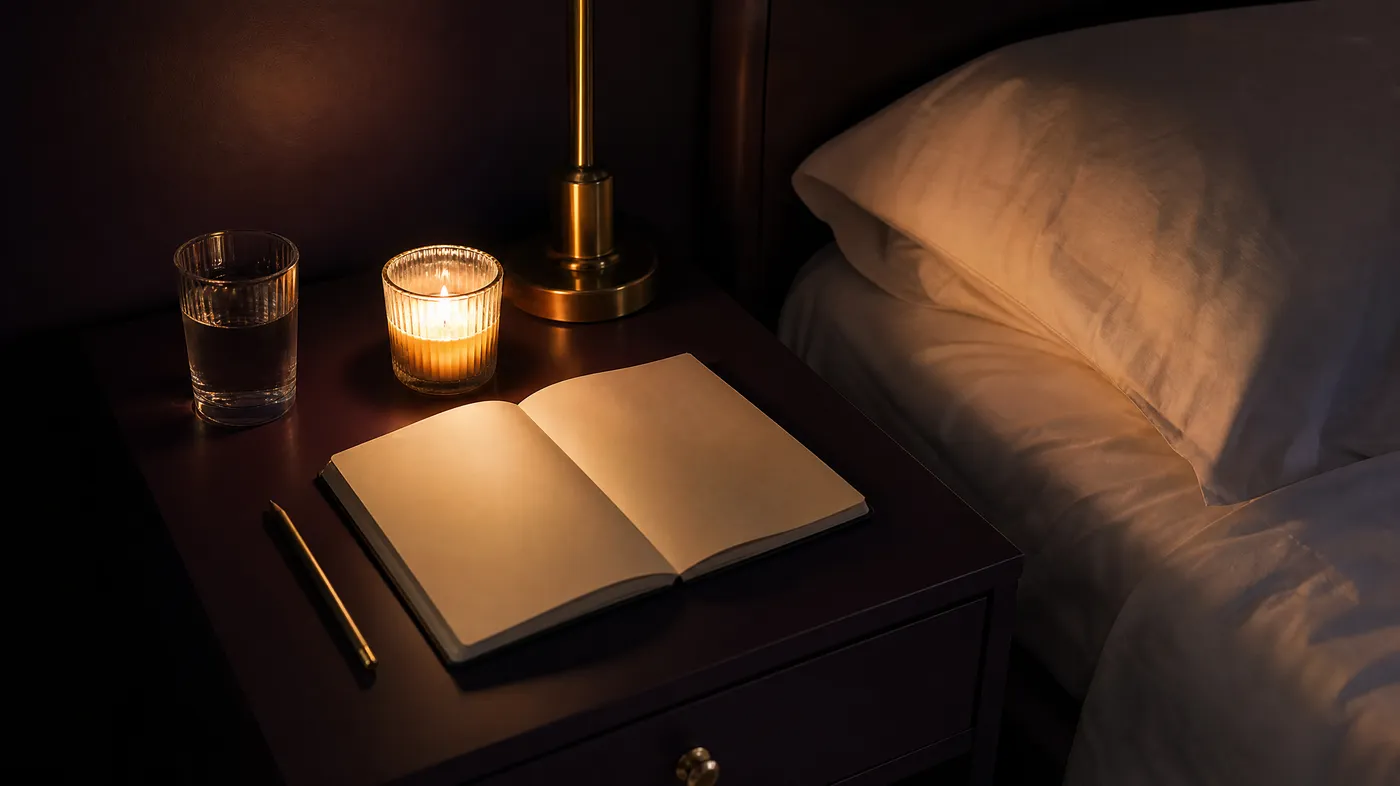
After all the years and cycles, the notebooks close on a remarkably simple note. The quote shared in the video runs: "In the evening, when you go to bed, review the day gone by... hold yourself to honest self-reflection before your own conscience."
This is the single part of the whole text you can test tonight. Try it like this:
- Before sleep, run through the day in reverse, from your final conversation back to morning. This keeps memory from skipping uncomfortable moments.
- Pause at one choice you would handle differently. One is plenty.
- Do not judge yourself with words you would never use with a friend. Honest reflection is not self-punishment.
Doing this for seven consecutive nights makes for a fitting test, matching the number at the heart of this entire system. To make it easier, keep a small pad by the bed and jot down one sentence. After a week, you will have your own small record, carrying a date that cannot be disputed.
How to Read Predictions Without Getting Misled
Whenever Vanga, Sevryukova, or any other name appears in a headline alongside a calendar year, three questions help cut through the noise. Who wrote down the words and when were they published? Which claim is concrete enough that it could actually prove false? And what would have happened anyway, even without a prophecy? We apply those exact questions in our article on Baba Vanga, where the temptation to spot coincidences is just as strong.
Prophecies for humanity address everyone at once. If you want to know what the coming months hold for you personally, our free natal chart shows your baseline, while the yearly report on Vrachka connects it with planetary transits month by month.


