Skip to content
Vrachka
Ask the Oracle

Library

Palm reading: the lines of the palm in palmistry

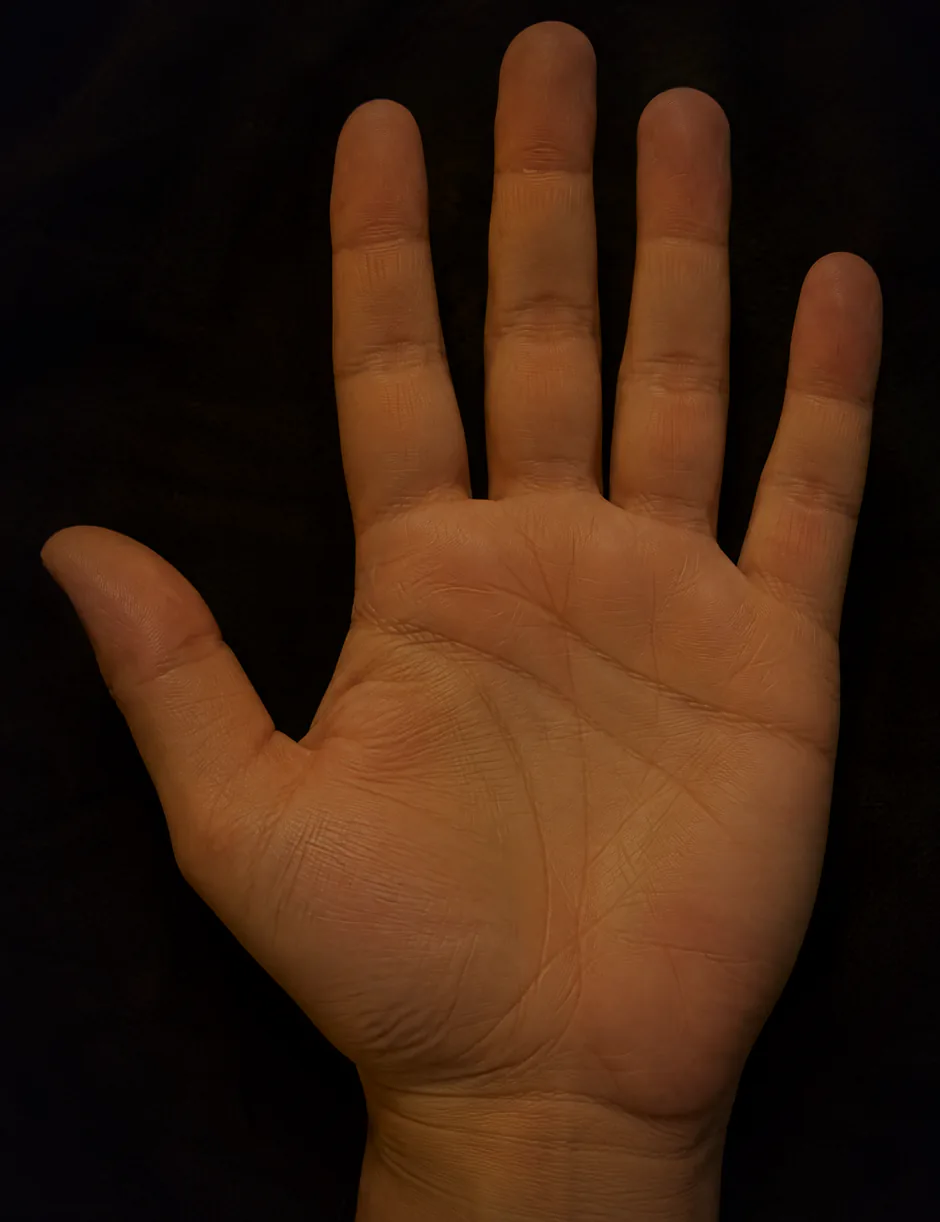
The palm has four main lines. The life line circles the base of the thumb, and the heart line runs horizontally under the fingers. The head line crosses the middle of the palm. The fate line runs from the wrist toward the middle finger. In palmistry the length of the life line does not show how long a person will live.

Vrachka editorial team Updated Editorial Policy

Diagram: the main lines of a left palm

Palmistry

What is palmistry?

Palmistry is divination by the hand: it reads the lines, the shape and the mounts of the palm by tradition. It is a tradition of self-observation: the lines are read as tendencies of character, without predicting events.

A natal chart needs the date, time and place of birth. Palmistry works with what can be seen on the hand today, so you can start right away, with your hand in front of you.

Four lines

The four main lines of the palm

For each line: where it is, what the tradition links it with and how it is read when it is short, long or broken.

Life line

Circles the base of the thumb and runs down toward the wrist.

In palmistry it is linked with vitality and the rhythm of everyday life.

Short
A fast, intense rhythm. The tradition links it with people who like to start new things.
Long
An even rhythm and patience for long tasks.
Broken
A major change: a transition, a move, a new chapter in life. A break does not mean death.

Heart line

Runs horizontally across the upper part of the palm, under the fingers.

Linked with feelings, with love and with the way a person shows affection.

Short
Reserve in feelings. Affection comes slowly and stays long.
Long
An open person who shows their feelings and grows strongly attached.
Broken
In the tradition it is the trace of a great disappointment in love, after which a person learns to trust again.

Head line

Crosses the middle of the palm, between the heart line and the life line.

Linked with the way of thinking and with making decisions.

Short
Practical thinking and quick decisions.
Long
An analytical mind that thinks a long time before deciding.
Broken
Hesitation between reason and feeling; a time when a person rethinks their decisions.

Fate line

Runs vertically from the wrist toward the middle finger. Not everyone has one.

Linked with work, calling and direction in life.

Short
Work finds its direction later in life.
Long
An early sense of calling and a clear direction at work.
Broken
Several changes of work or of direction.

Four types

The four hand types

Palmistry divides hands by the shape of the palm and the length of the fingers and names them after the four elements.

The four hand types: the shape of the palm, the fingers and the traits by tradition
TypePalmFingersBy tradition
Earth handsquareshortPracticality and reliability. Good craftspeople who like order and tradition.
Air handsquarelongCuriosity and sociability. People of ideas and of words, who can also listen.
Water handlonglongSensitivity and intuition. People of art and of care, sometimes melancholic.
Fire handlongshortEnergy and passion. They cannot stand boredom and often lead others.

Seven mounts

The mounts of the palm

The mounts are the raised areas of the palm; each bears the name of a planet. In the tradition the more pronounced mount suggests which trait prevails in a character.

Diagram: the mounts of a left palm
Mount of Venus
around the base of the thumbLove, attachment and a sense of beauty.
Mount of Jupiter
under the index fingerAmbition, confidence and the wish to lead.
Mount of Saturn
under the middle fingerSeriousness and a sense of responsibility.
Mount of the Sun
under the ring fingerCreativity and the wish to be seen.
Mount of Mercury
under the little fingerCommunication, trade and dexterity.
Mount of the Moon
low on the edge of the palm, opposite the thumbImagination and intuition.
Mount of Mars
two areas: by the thumb, above the mount of Venus, and on the edge of the palm, under the mount of MercuryCourage in the first and endurance in the second.


Six steps

How to read your own hand

  1. Choose the hand

    Start with the hand you write with. Then compare it with the other one in the same light.

  2. Look at it in daylight

    Daylight from the side shows the lines most clearly. If you rub your palms for a few seconds, the creases show better.

  3. Find the type

    Look at the shape of the palm and the length of the fingers: an earth, air, water or fire hand.

  4. Trace the four lines

    Start with the life line around the thumb. Then the heart line at the top, the head line in the middle and the fate line, which runs up toward the middle finger.

  5. Look at the mounts

    Which are the most pronounced? In the tradition they suggest which trait prevails.

  6. Describe before you interpret

    First write down what you see: length, direction, breaks. Only then read the meaning. Age, a diagnosis or the length of a life is not read from a line.

Frequently asked questions

Which hand should I read: the left or the right?

Both. The hand you write with is taken as your present path, and the other as what you were born with. The difference between them shows what you have changed over the years.

Can the life line tell me how long I will live?

No. This is the most widespread myth about palmistry. The tradition links the life line with vitality and the rhythm of everyday life; the length of a life is not read from it.

Do the lines on the hand change over time?

The main lines stay almost the same, while the smaller ones may fade, lengthen or appear anew. According to palmists such a change reflects big decisions and turns in life.

What does it mean if I have no fate line?

It is not a bad sign. Many people have no clearly marked fate line. In the tradition it means that the direction at work is not drawn in advance and a person chooses it.

Is palmistry a science?

No. There is no proven link between the lines of the palm and future events. Palmistry is a tradition of interpretation and self-observation.

The next step

Palm reading from a photo

A reading of the four main lines from a photo of your palm.

Read my palm

Free and no sign-up. The photo is not stored.