























 Six of Swords
Swords · 6 of 14
Six of Swords: tarot card meaning
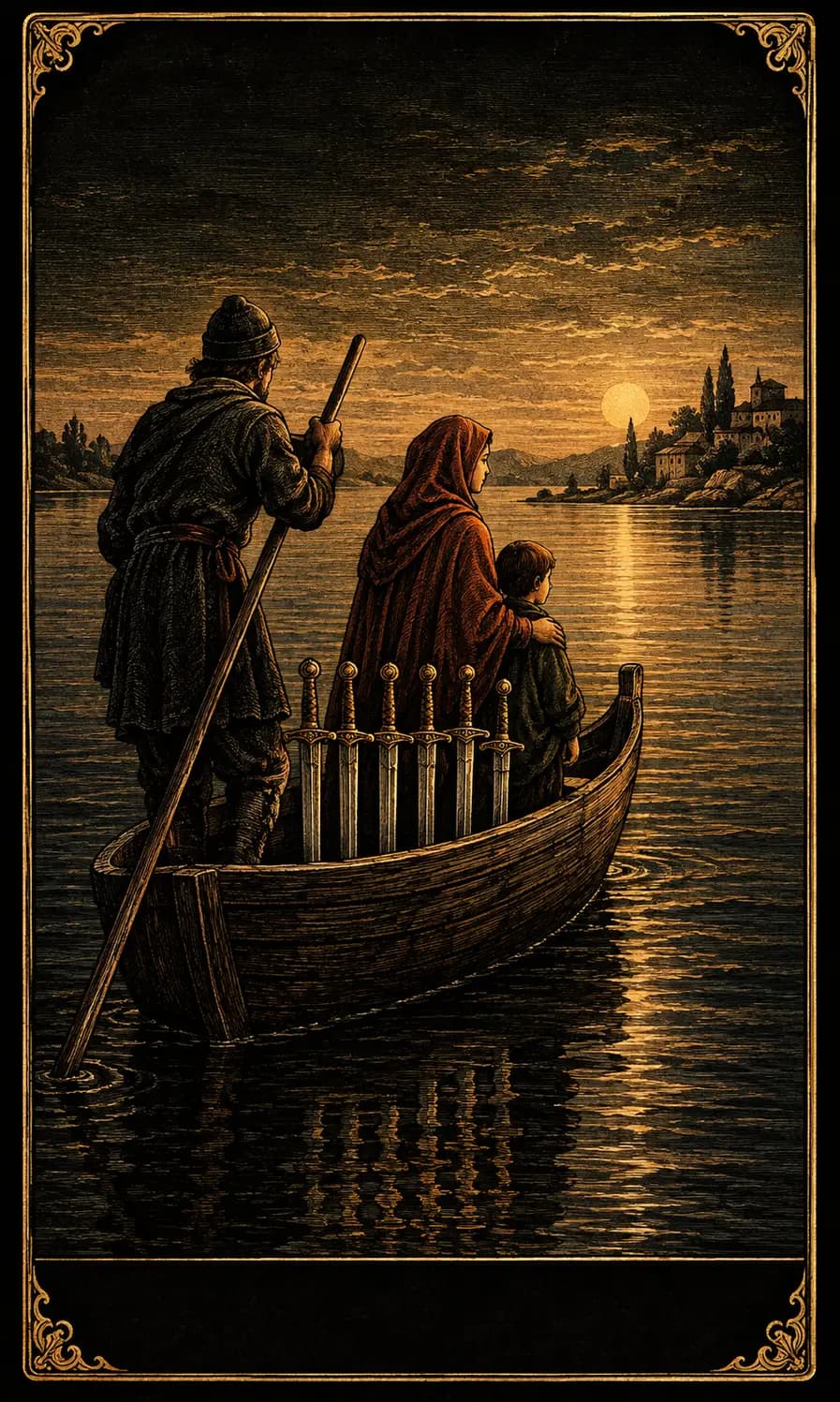
The Six of Swords is the sixth card of the suit of Swords in the Minor Arcana of tarot. In a reading, the upright card is read as transition, journey and evolution, and the reversed card as resistance to change, stagnation and disorientation. In the classic Rider-Waite-Smith deck, we see a boat crossing calm waters, carrying a ferryman and two passengers.
- Upright
- transition, journey, evolution, releasing the past, serenity
- Reversed
- resistance to change, stagnation, disorientation, isolation, paralysis
The Six of Swords is a card of transition and movement. Six swords are embedded in the boat, pointing forward, while the shore they are leaving fades into the distance as they head toward a new horizon.
This card speaks to departing from a difficult situation, leaving the past behind, and seeking a better future. It symbolizes movement: not necessarily fast or exhilarating, but a steady, deliberate departure from pain and hardship. The Six of Swords is a card of healing and finding peace after the storm.
The core themes here are overcoming adversity, moving away from conflict, seeking tranquility, and journeys toward a new beginning. The Six of Swords reminds us that sometimes, we must leave in order to find rest. This is rarely easy, but it is essential for personal growth.
Six of Swords upright
Ahead of you lies a brighter future, and a trying period in your life may be over. You may feel ready to put that pain behind you and to start moving forward. It is a time for movement, a change of scenery, or the pursuit of new opportunities.
The upright card encourages you to embrace change. It may be necessary to distance yourself from something that is causing you suffering: be it a relationship, a career path, or even a limiting mindset. Do not fear making this difficult choice. The Six of Swords reminds you that peace awaits on the other shore.
The message here is one of healing. Give yourself time to recover from past wounds. Focus on the future and what you wish to manifest. Reassess your priorities and strive for inner peace and stability. Seek ways to release negative emotions and restore your internal balance.
Specific guidance includes traveling, changing your environment, seeking professional support if needed, or simply giving yourself space to reflect and detach from stress. Allow yourself to heal. Do not rush into new commitments until you feel truly ready.
Six of Swords reversed
This often points to stagnation or trouble with a transition. You may feel stuck in a tough spot, and the weight of the past may be hard to put down. It is possible that you are resisting necessary change or fearing the unknown.
This position can also signal procrastination. Perhaps you are putting off important decisions or failing to take the steps required for progress. The reversed card warns you against succumbing to inertia and urges you to face your fears.
Another aspect is an inability to heal. You may be revisiting old wounds or allowing past issues to continue haunting you. The reversed card advises you to seek support if you cannot manage the process alone; do not hesitate to speak with a therapist or a trusted confidant.
The warning is not to linger in negative situations. Identify what is holding you back and find ways to release that burden. Embrace change, however difficult it may seem. Sometimes, you must withdraw to recover.
Love and relationships
In terms of love, the upright Six of Swords for singles can mean that you are moving past a disappointment and opening yourself to new possibilities. You are likely ready to break free from toxic patterns and pursue healthier connections.
For those in a relationship, the upright card may suggest that you are moving through a difficult phase, but are on the path toward overcoming it. This may be a time for making important decisions, such as moving in together, changing your dynamic, or simply improving your communication. It is crucial to work together toward a shared goal.
The reversed Six of Swords in love can signal communication breakdowns or resistance to change. For singles, it may mean you are afraid to open your heart to a new connection. For couples, it may point to unresolved issues leading to growing distance.
The reversed card advises you to face relationship problems head-on. Speak openly with your partner and seek help if necessary. Do not fear making the changes required to improve your bond. Love requires effort, but it is worth it.
Career and finance
In your career, the upright Six of Swords is a very positive sign. It indicates that you are ready to leave an unfavorable work environment or move toward a better position. This could mean changing jobs, starting your own business, or simply shifting your professional approach.
Financially, the card suggests an improvement in your situation. You may be emerging from a period of financial difficulty or discovering new ways to increase your income. The Six of Swords encourages you to plan for the future and seek new opportunities for growth.
The reversed Six of Swords in a career context can indicate workplace struggles or a lack of progress. You may feel stuck in your current role or unable to see a path for advancement. It is highly recommended to reassess your professional goals.
Financially, the reversed card may warn of financial instability or poor decision-making. Be cautious with investments and spending. Review your budget and strive for stability. Seek new opportunities and do not fear changing direction if it is necessary.
Health and well-being
This is an interpretation in the tarot tradition. For your health, ask a doctor.
The Six of Swords in the context of health and well-being advises you to pay attention to your emotional health. This is a time to release stress and negative emotions. Seek out ways to calm your mind and find inner peace.
It is recommended that you practice self-care and allow yourself time for rest and recovery. Consider ways to improve your lifestyle, such as healthy eating, regular exercise, and getting enough sleep. Seek help if you feel overwhelmed.
Yes or no
The Six of Swords generally answers with a "Qualified Yes." It shows that there is progress and movement toward positive results, though time and effort may be required. The outcome is positive, but not always immediate.
Combinations with other cards
When the Six of Swords appears alongside The Chariot, it signifies a swift and successful journey. A change of residence or a trip that brings new opportunities may be on the horizon.
In combination with The Tower, the card warns of a sudden change that, while potentially jarring, will ultimately lead to a release from old problems. It is a time for profound transformation.
If the Six of Swords appears with the Two of Cups, it can mean a new beginning in a relationship. You might meet someone new or see a significant improvement in your current partnership.
Together with the Eight of Swords, this combination shows a release from limitations and a breakthrough over your fears. You likely felt trapped, but are now ready to face your challenges.
When you see the Six of Swords alongside the Ten of Wands, it means you are letting go of the burdens of the past and are ready for a fresh start. It is time to leave those old problems behind and set off on a new path.
Six of Swords
Frequently asked questions
What does the Six of Swords mean in love?
In love, the Six of Swords usually signifies a transition toward better relationships. For singles, it can be a sign of leaving past disappointments behind, while for couples, it indicates overcoming hardships and seeking a shared future.
What is the meaning of the Six of Swords as advice?
As advice, the Six of Swords encourages you to release negative emotions and focus on the future. It is a time for change, movement, and seeking new opportunities for personal growth.
Swords
Discover more cards
Next step
What are the cards trying to tell you right now?
Draw a card and describe what you see. Then compare your reading with the guide.
Draw your cardsTarot spreads and their positionsOne-Card Spread
The cards on this page are from Vrachka's deck; the descriptions of the pictures follow the Rider-Waite-Smith deck.