Herbs
Basil
Basil appears in home and ritual practice as a symbol of well-being and hospitality. A potted plant needs care; a leaf in a wallet does not bring income. Common basil is Ocimum basilicum. Do not automatically equate it with tulsi, a different species. Cultivars can have green or purple leaves.
This is a tradition and not medical advice.
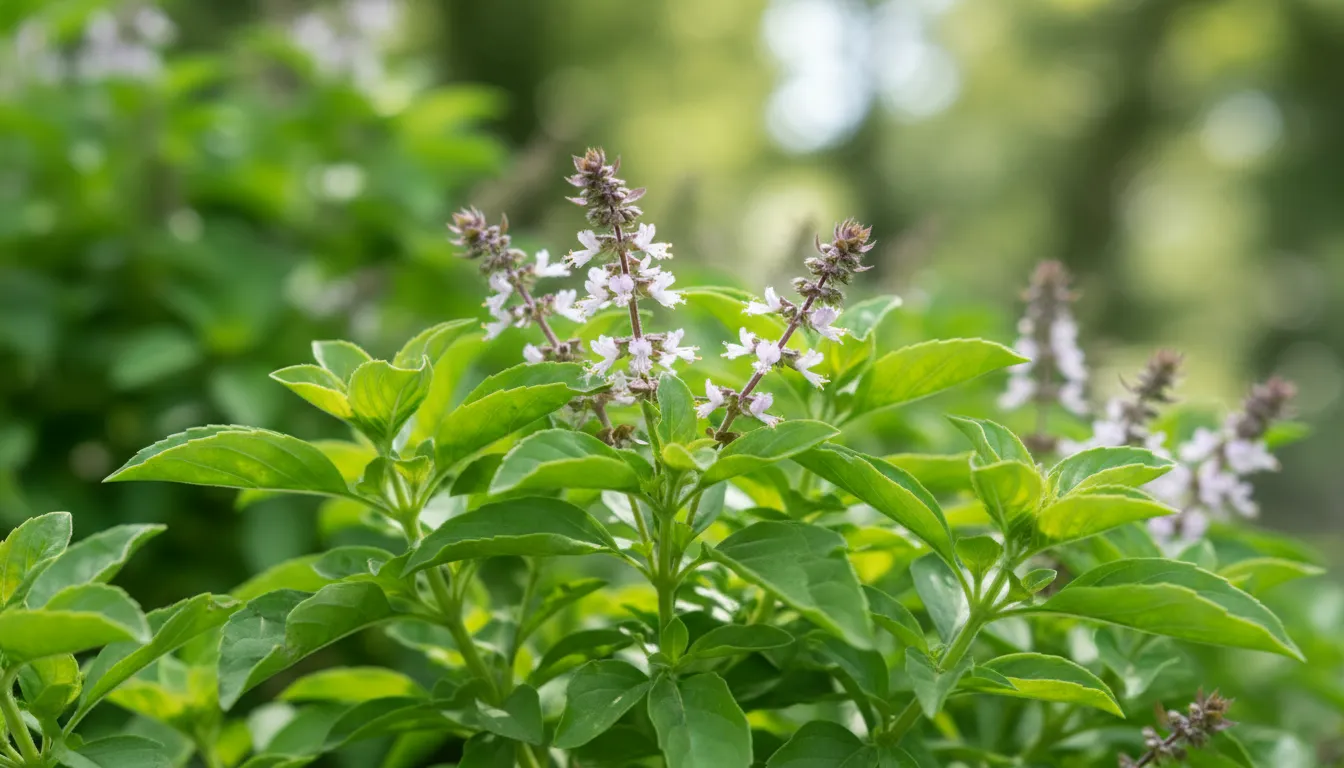
Ocimum basilicum
In this article4 parts
Which plant is it?
| Botanical name | Ocimum basilicum |
|---|
The illustration is a study aid. Use a botanical identification reference or a qualified specialist before collecting plants for consumption.
Symbolism and ritual meaning
Well-being: caring for a living plant provides an image for something you want to develop gradually.
Home: a sprig in a seasonal arrangement can express welcome and good wishes. This is symbolism, not protection for a property.
| Planet | Mars, Sun |
|---|---|
| Element | Fire |
| Themes | Money, Prosperity, Love, Protection |
These are symbolic associations used in this reference, rather than measured properties of the material.
A personal ritual with basil
If you associate basil with money, place a written goal beside the pot: an amount to save, a deadline and a first step. Review progress when tending the plant.
Use dry leaves for a decorative pouch. Do not keep damp leaves enclosed in a wallet or jar.
Precautions
For food, use a product intended for consumption. Ornamental plants and materials sold for burning should not be treated as food products.