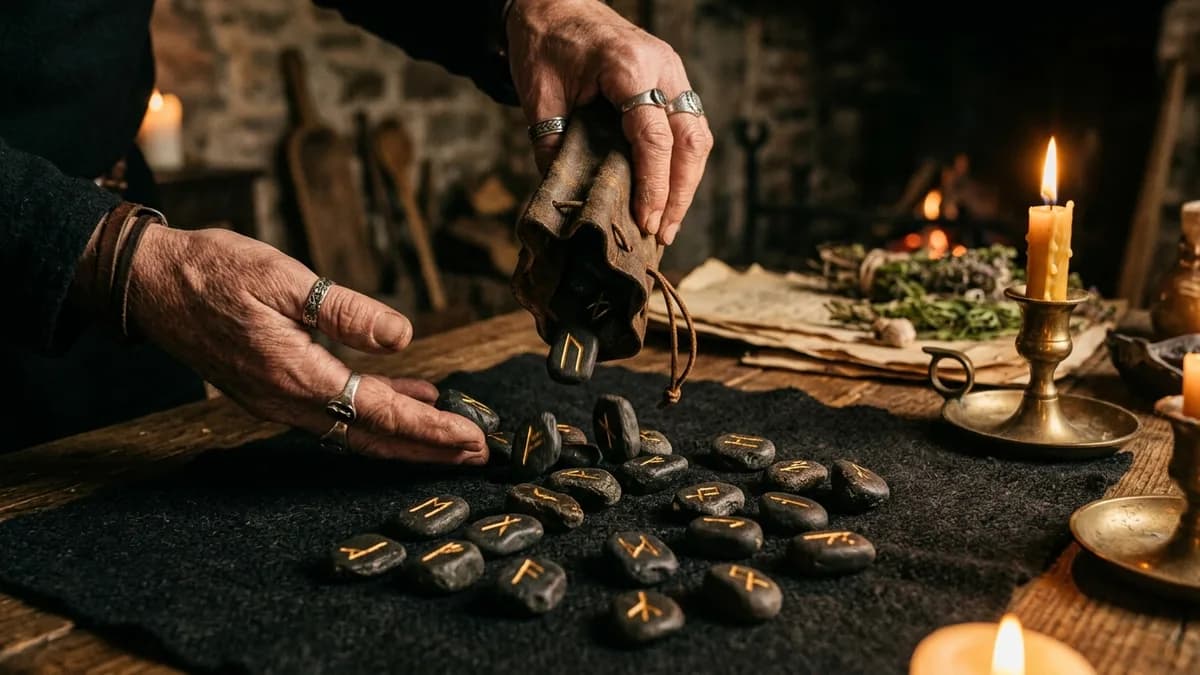
How to Read Runes - Step-by-Step Guide
In brief:
- Successful rune divination begins with a properly formulated question - open-ended questions focused on action and self-reflection yield the most accurate answers.
- Physical drawing requires focus; runes are turned like pages of a book to maintain their upright or reversed position.
- A single rune spread provides clear, concentrated focus on a specific problem or the day's theme.
- The three-rune spread (The Three Norns) analyzes the past, present, and potential outcome of a situation.
- The five-rune Rune Cross offers a deep analysis, including the root of the problem and challenges along the way.
- Runes do not predict an inevitable fate but indicate energetic currents and the likely outcome based on your current actions.
Preparation and Mindset Before Rune Divination
Understanding how to divine with runes means mastering a very direct and often uncompromising language. Unlike other systems, the Elder Futhark is not inclined to soften circumstances. Runes speak through imagery from nature and raw human experience - ice, fire, cattle, hail, joy, and stagnation. To conduct successful rune divination, the first step is not the casting itself, but your personal preparation.
Before reaching for your pouch, it's necessary to clear your mind of expectations for a specific answer. If you are highly emotionally affected - for example, you've just had a heated argument or are in a state of panic - the runes will often reflect your own inner chaos rather than provide objective advice. Find a quiet place. Some practitioners prefer to light a candle or use a special cloth for casting, but these are external attributes. True preparation happens in the mind. Focus on your breathing for a few minutes until you feel present in the moment. If you are a complete beginner and want to understand the basics of the system before proceeding, you can explore our Runes - A Complete Beginner's Guide to Divination.
It's important to also understand the mechanism of the process. You are not asking an all-knowing external authority that controls your life. You are using the runes as a mirror to your subconscious and as a tool for analyzing hidden factors in a given situation. They show which way the wind is blowing, but you are the one holding the ship's helm.
The Art of Asking the Right Questions
The most common reason for confusing rune spreads is a poorly formulated question. Runes respond best to questions that require analysis, action, and understanding of processes. They perform poorly with questions that demand a simple "Yes" or "No" answer, as well as attempts to shift responsibility.
If you ask, "Will I ever become rich?", you are placing yourself in a passive position. You are waiting for fate to do the work. If you draw the rune Fehu (wealth), you might rejoice, but if you draw Isa (stasis), you will despair. In either case, you receive no useful information about what you need to do. The correct approach is to transform the question into an active one: "What is blocking my financial development right now?" or "What should I focus on to improve my material situation?".
Examples of Question Transformation
| Wrong / Passive Question | Correct / Active Question | Why is the second one better? |
|---|---|---|
| Will he/she come back to me? | What do I need to understand about the dynamics of this relationship? | Focuses on awareness and your role, rather than the actions of others, which you do not control. |
| Will I be hired for this job? | What qualities should I demonstrate to be a successful candidate? | Gives you a concrete strategy for action and preparation. |
| Will I have problems with this project? | What is the biggest hidden challenge for this project? | Removes fear and directly illuminates potential obstacles so you can resolve them preventatively. |
| Should I move to another city? | What will moving bring me compared to staying here? | Allows the runes to show the energy of two different directions. |
When formulating your question, hold it clearly and distinctly in your mind. Do not ask about two different things simultaneously (e.g., "What will happen to my job and my dog's health?"). One question - one spread.
How to Physically Cast Runes
The term "casting runes" has historical roots when practitioners literally threw a handful of carved pieces of wood or bone onto a white cloth and read those that landed face up. Today, most people use the drawing method from a pouch, which is more structured and suitable for specific spreads.
Steps for Drawing from a Pouch
Place your hand in the pouch while holding the question in your mind. Shuffle the runes slowly. Feel them with your fingers. The wood, stone, or bone has its own texture. Some practitioners wait to feel a specific rune - one that seems to "stick" to their fingers or feels warmer/colder. Others simply shuffle and draw the first one they grasp. Both methods work, as long as the intention is clear.
When you draw a rune, how you place it on the table is critically important. Since the Elder Futhark contains asymmetrical runes that have different meanings when reversed, the placement determines the position. Always turn the rune like a page of a book - from right to left or left to right. Never turn it from bottom to top (like scrolling), as this will artificially reverse it (merkstave), changing its message. To better understand how these positions work, read about Reversed Runes (Merkstave) - Meanings and Interpretation.
If you don't have a physical set handy, you can perform a free rune casting digitally, focusing on the same principles of question formulation.
Single Rune Spread (Odin's Rune / Daily Rune)
This is the simplest, yet often the most powerful, rune spread. It is used to gain clear, unambiguous focus on a situation. Many beginners overlook it, rushing to complex layouts, but a single rune contains a vast amount of information if you know how to read it.
The single rune spread is ideal for:
- Daily Rune: Drawn in the morning with the question, "What will be the main theme or energy of today?" This is an excellent way to learn the meanings of runes through real-life experience.
- Quick Advice: When faced with a sudden decision and needing guidance immediately.
- Clarifying Focus: When you are confused and want to know, "What is the most important thing I need to realize right now?"
Practical Example: Single Rune Spread
Situation: Ivan has an important meeting with a potential business partner. He feels insecure and asks the runes: "What attitude should I have during this meeting to make it successful?"
Drawn Rune: Tyr (Tiwaz) in an upright position.
Interpretation: Tyr is the rune of the spiritual warrior, of justice, logic, and sacrifice for a higher purpose. It resembles an arrow pointing upwards. The message to Ivan is extremely direct: he must be confident, stand by his positions honestly and openly, without resorting to manipulation. Tyr requires a rational approach, not an emotional one. Ivan must present the facts clearly and seek a fair deal. If Ivan had drawn the same rune, but reversed, the advice would be fundamentally different - a warning of lack of motivation, possible injustice, or the need to retreat because the battle is already lost.
Three Rune Spread (The Three Norns)
When a situation requires more context, the three-rune spread is the gold standard in rune divination. Traditionally, it is associated with the Three Norns of Norse mythology - Urd (That which was), Verdandi (That which is becoming), and Skuld (That which should be).
The runes are drawn one by one and laid out from left to right.
- Position 1 (Left) - Past / The Root: Shows the events, decisions, or energies from the past that led to the current situation. This is not just any past, but the specific root cause of the problem you are asking about.
- Position 2 (Middle) - Present / The Action: Reflects the current state of affairs. What is happening right now, what are your thoughts, or what external factors are influencing the moment.
- Position 3 (Right) - Future / Likely Outcome: Shows where the situation is heading if you do not change your course. An important rule in rune divination is that the future is not set in stone. This rune indicates the most likely result based on current momentum.
Alternative Meanings for Three Runes
You are not obligated to use the Past-Present-Future format. Depending on the question, you can define the positions beforehand:
- Situation / Challenge / Advice for Action
- Mind / Body / Spirit (for questions related to health and inner balance)
- You / The Other Person / The Dynamic Between You (for relationships)
Practical Example: "The Three Norns" Spread
Situation: Maria has a long-standing conflict with her sister over inherited property. She asks: "How should I approach resolving this conflict?" We use the Situation / Challenge / Advice model.
Drawn Runes:
- Situation: Othala (Othala) - upright.
- Challenge: Hagalaz (Hagalaz).
- Advice: Gebo (Gebo).
Interpretation:
The first rune, Othala, is the literal symbol of inheritance, home, lineage, and real estate. The runes clearly confirm the nature of the question - it's about ancestral property and family ties. This indicates that the spread is "tuned" correctly to the problem.
The second rune, Hagalaz (hail, destruction, external forces), is the challenge. Hagalaz is a symmetrical rune; it has no reversed position. Its presence here indicates that the conflict is destructive, uncontrollable, and harms both parties. Hail is a natural disaster - the challenge is that emotions have gone out of control, and old traumas (ice) are crashing down on the present. The situation cannot be resolved by force or imposition of will.
The third rune, Gebo (gift, partnership, balance), is the advice. Gebo is also symmetrical. It symbolizes equality, exchange, and the making of agreements. The advice to Maria is clear: she must seek compromise. Gebo requires both parties to give something to receive something. The solution will not come through court or aggression (which would be represented by runes like Tyr or Thurisaz), but through a voluntary agreement where each sister makes a concession in order to restore balance.
To understand each of these runes in detail, you can refer to the Meaning of the 24 Runes (Elder Futhark).
Five Rune "Rune Cross" Spread
When faced with a serious life crossroads - a career change, moving to another country, ending a marriage - the five-rune spread offers the depth you need. It not only shows the timeline but also the hidden factors that help or hinder you.
The runes are drawn and placed in the following sequence, forming a cross shape:
- Position 1 (Middle) - The Present: The core of the problem, where you are currently.
- Position 2 (Left) - The Past: What led to this situation.
- Position 3 (Right) - The Future: Where things are heading, the likely outcome.
- Position 4 (Bottom) - The Root / Foundation: Hidden factors, subconscious motives, or the solid base you stand on. These are the things beneath the surface.
- Position 5 (Top) - The Challenge / Higher Purpose: What you need to overcome, or the best possible action you can take.
Practical Example: Rune Cross
Situation: Georgi has worked as an accountant for 10 years but feels completely exhausted. He is considering quitting his secure job and starting his own wood furniture manufacturing business - his hobby. He asks: "What will be the outcome if I make this career change now?"
Drawn Runes:
- Middle (Present): Isa (Isa) - Ice.
- Left (Past): Jera (Jera) - Harvest, cycle.
- Right (Future): Uruz (Uruz) - Wild bull, strength, formation. Upright.
- Bottom (Root): Fehu (Fehu) reversed - Loss of resource, fear of money.
- Top (Challenge): Kenaz (Kenaz) - Torch, creativity, skill. Upright.
Detailed Analysis of the Cross:
We start from the center. Isa (Ice) shows exactly how Georgi feels in his current job - frozen, stagnant, with no forward movement. The situation is cold and blocked. There is no growth.
We look to the left. Jera (Harvest) in the past shows that he has put in a lot of effort over these 10 years. He has gone through the full cycle of this profession, harvested what he could (experience, salary), but the cycle has now ended. Jera also has no reversed position; it simply marks a completed stage.
We look down at the root. Fehu reversed is extremely telling. Fehu is the rune of wealth. Reversed, it shows Georgi's deep, subconscious fear of financial loss. This is what keeps him in the state of ice (Isa). He fears that if he quits, he will be left without money and security.
We look up at the challenge. Kenaz (Torch) is the rune of the craftsman, of creative fire and technical skill. The challenge for Georgi is to believe in his own hands and skills (furniture making). The fire of Kenaz is exactly what is needed to melt the ice of Isa in the center. He needs to turn his hobby into conscious mastery.
Finally, we look to the right at the future. Uruz (Wild bull) in an upright position portends raw, untamed strength and vitality. This will not be an easy path. Uruz requires immense physical and mental endurance, but it carries the potential for creating something solid and true. The future will not be calm; it will require a lot of work, but it will restore the vitality he has lost.
Overall Message: The runes strongly support the change. The fear of lack of money (reversed Fehu) keeps him stagnant (Isa). If he applies his creative skills (Kenaz), he will go through a period of intense, raw building (Uruz), which will pull him out of the completed cycle of his old job (Jera).
Tips for Connecting Runes into a Single Message
The biggest difficulty in rune divination is not memorizing their meanings, but understanding how they interact in a spread. Runes are not isolated words; they are a sentence.
Interaction of Elements
When examining the drawn runes, pay attention to the elements they represent. If you have predominantly "fire" runes in a spread (Sowilo, Kenaz, Tyr), the situation is dynamic, fast, and requires action. If "ice/water" runes (Isa, Laguz, Hagalaz) prevail, the situation is slow, emotional, or externally blocked. The clash of fire and ice in a spread often indicates an internal conflict or a sudden, explosive change.
Affiliation with Aettir
The Elder Futhark is divided into three groups of 8 runes each, called aettir. If your spread is dominated by runes from the first aett (of Frey), the question concerns material survival, resource creation, and the physical world. If they are from the second aett (of Heimdall), the theme is related to external forces, fate, crises, and transformation. If they are from the third aett (of Tyr), the focus is on intellect, spirituality, justice, and human relationships. For a deeper understanding of these groups, see The Three Aettir of the Runes and Their Meaning.
Majority of Reversed Runes
If in a 3 or 5 rune spread, most are reversed (merkstave), it is a clear signal of internal blockages, delays, or negative development. In such cases, it is advisable to stop, reconsider your question, and not take aggressive action. Reversed runes often indicate that energy is directed inward (self-sabotage, hidden fears) rather than outward.
Common Mistakes in Rune Divination
Even experienced practitioners sometimes fall into traps when emotions take over.
- Over-drawing: This is the most common mistake. You ask something, draw Hagalaz (destruction), and don't like it. Then you say, "Let me draw one more for clarification," and draw Isa. You still don't like it. You keep drawing until Wunjo (joy) comes out. This renders the entire process meaningless. Accept the first answer, however harsh it may be.
- Ignoring the difficult runes: Runes like Nauthiz (need, constraint), Hagalaz (hail), and Isa (ice) are often perceived as "bad." There is no pure evil in runes. These runes indicate necessary processes of cleansing, slowing down, and realization. Ignoring Nauthiz's warning almost always leads to bigger problems.
- Asking the same question repeatedly: If you ask the runes about a situation on Monday, there's no point asking again on Tuesday, unless you have taken a radically new action in between. Runes require time for their energy to unfold.
- Treating runes like Tarot: Although both are divinatory systems, they speak different languages. Tarot is highly visual, psychological, and often descriptive. Runes are abstract, energetic, and direct. If you're wondering which system is more suitable for you, read Runes vs. Tarot and Lenormand - Which System to Choose.
Divination Journal (Why It's Essential)
If you want to develop in how to divine with runes, relying solely on your memory will not be enough. Keeping a journal is a key practice. The human brain tends to remember only what it wants and to distort memories based on the final outcome.
Record in a notebook or digital document:
- The exact date and time.
- The exact wording of the question (verbatim).
- The drawn runes and their positions (upright or reversed).
- Your initial interpretation and how you felt.
- Leave blank space to return after a month and write what actually happened.
This process will show you how runes speak to you personally. You might discover that when you draw Perthro (secrets, probabilities), in your life it always means a friend revealing hidden information, while the traditional meaning might be broader. The journal builds your personal rune vocabulary.
Frequently Asked Questions
Can I divine with runes for other people?
Yes, you can. The process is the same, but it's important to have their explicit permission. When drawing the runes, focus your consciousness on their question and their energy. Some practitioners prefer the person to reach into the pouch themselves and draw the runes, while the diviner only reads them.
What should I do if a rune falls on the floor while I'm shuffling?
In the tradition of rune divination, a "runaway" rune is considered extremely important. It literally demands your attention. Pick it up, see which one it is (and whether it fell upright or reversed), and include it as an additional factor or a main focus in the reading, even if it wasn't part of the planned spread.
Does the material the runes are made of matter?
The material does not change the meaning of the symbols, but it changes the feeling. Wooden runes are light, warm, and traditional (especially from ash, oak, or yew). Stone ones are heavy and grounding. Bone ones have a specific connection to ancestors. Choose a material that is pleasant to touch, as physical contact is an important part of drawing.
Should I cleanse my runes?
Yes, especially if you have used them for a heavy divination related to illness, conflict, or trauma, or if another person has touched them. You can cleanse them by smudging with herbs (sage, mugwort), by leaving them in moonlight, or simply by holding them in your hands and visualizing white light washing away accumulated energy.
What does the blank rune (Odin's Rune) mean?
The blank rune (Wyrd) is not part of the historical Elder Futhark. It was introduced in the 1980s by Ralph Blum. Traditional practitioners do not use it, as the 24 runes cover the entire spectrum of human experience. If your set has a blank rune, you can remove it or use it as a symbol of "the unknown" or "divine intervention." In this article and in the classic system, we work only with the 24 historical runes.
Can I use runes to predict exact dates?
Runes are weak at predicting specific times (e.g., "on March 15th"). They measure time through cycles and events. The rune Jera (harvest) can indicate a timeframe of one year or the completion of a season. The rune Isa (ice) indicates delay and the stopping of time, while Ehwaz (horse) indicates rapid, imminent development. Focus on the sequence of events, not the calendar.
What should I do if I can't understand a spread?
Take a photo of it or write it down in your journal and put it away. Do not draw new runes. Often, the subconscious needs a few hours or days to make the connection. Return to the photo the next day - it's very likely that the message will suddenly seem completely logical and clear.
Rune divination is a tool for self-knowledge and reflection. The information in this article is for educational purposes and does not replace professional medical, psychological, or financial advice. For important life decisions, consult a specialist.
Comments
Related Guides
Explore more guides in Guides
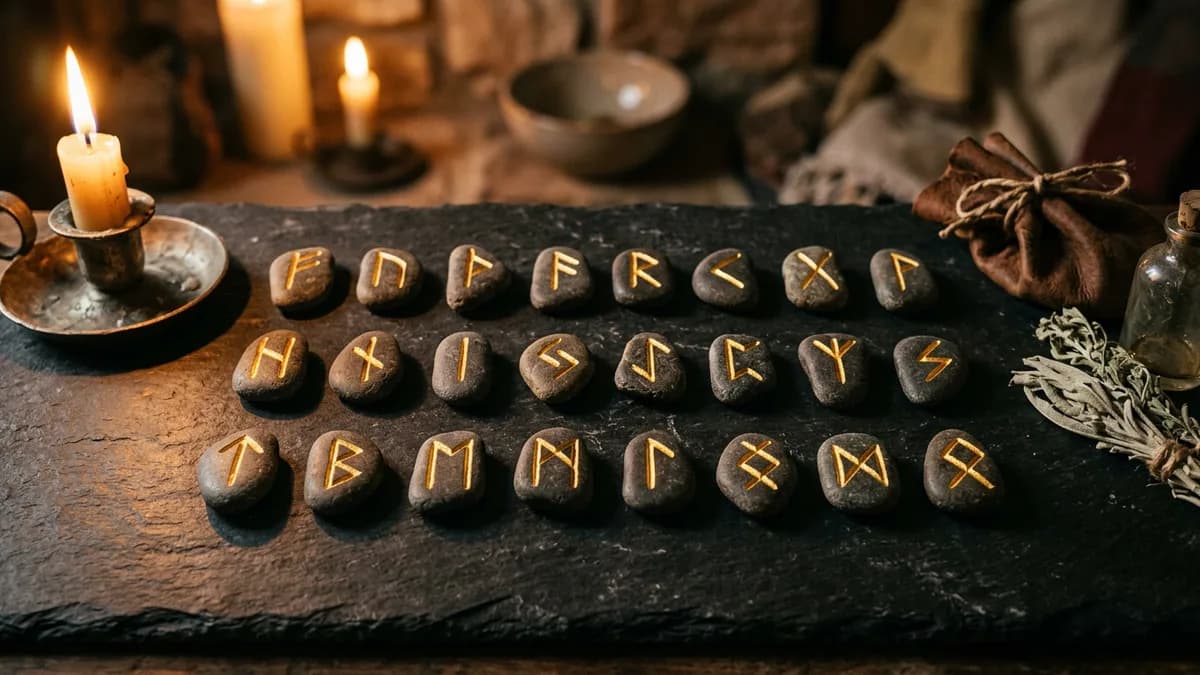
Meaning of the 24 Runes (Elder Futhark)
In brief: The Elder Futhark is an ancient system of 24 runes used for writing and divination, divided into three groups of eight runes called aettir. Each rune meaning…
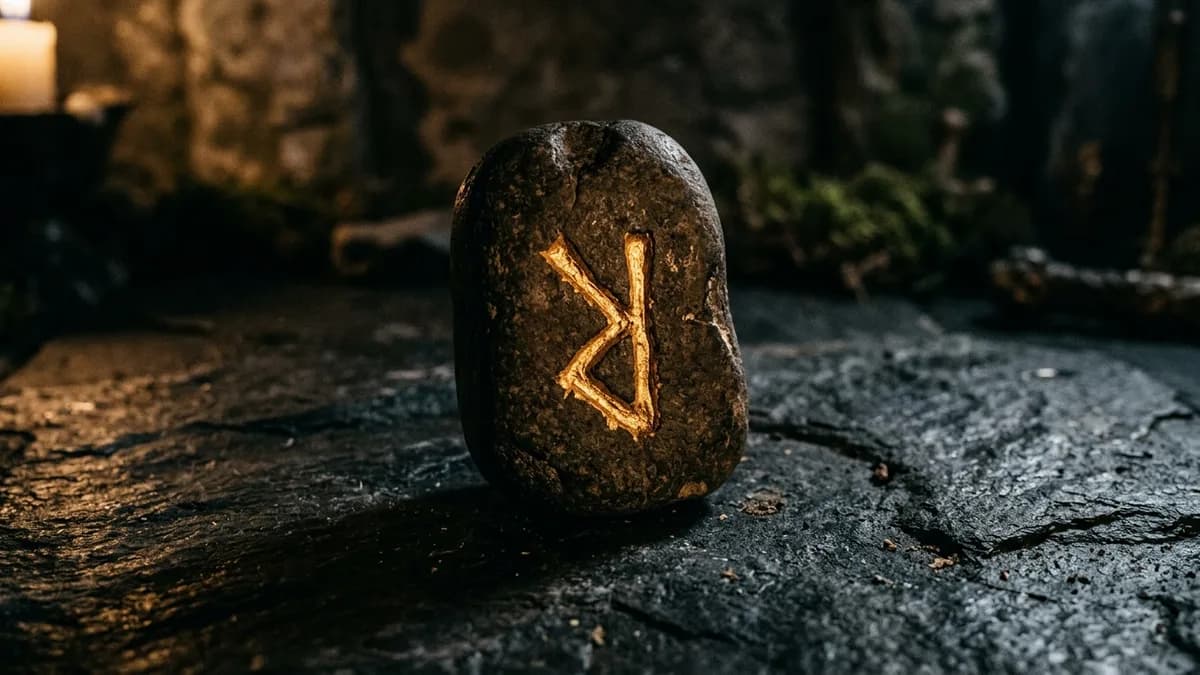
Reversed Runes (Merkstave) - Meanings and Interpretation
In short: Reversed runes (merkstave) are not a curse or bad omen; they indicate blocked energy, delays, or an internal process requiring attention. Of the 24 runes in…
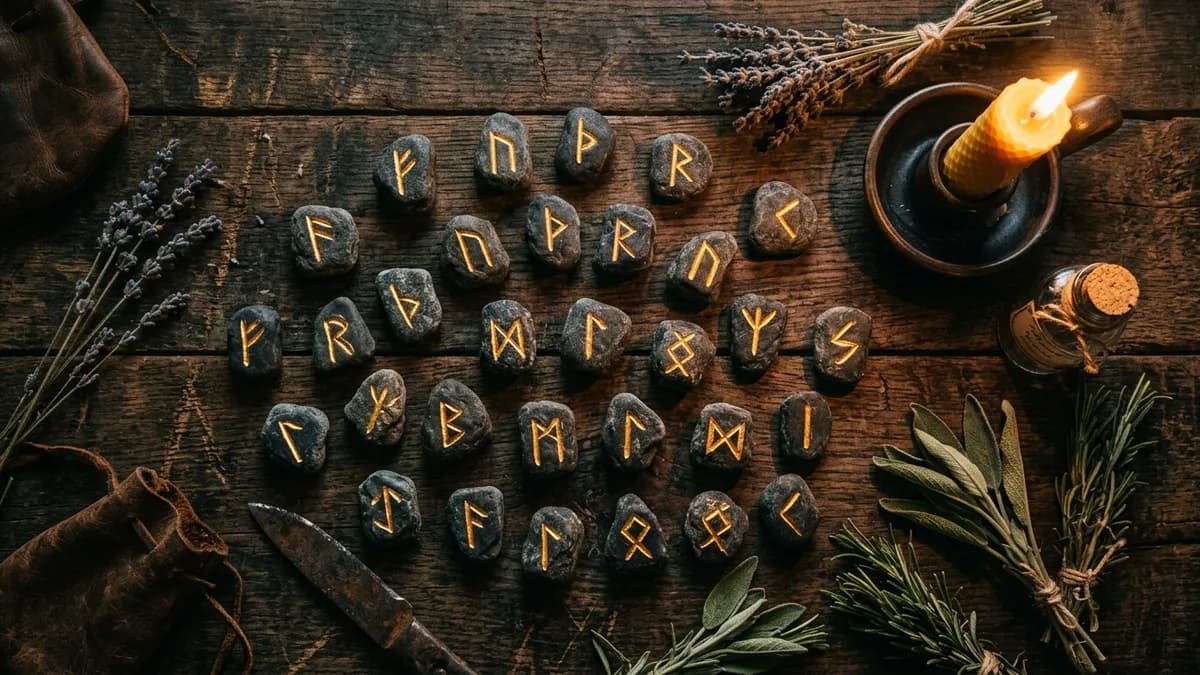
Runes: A Complete Beginner's Guide to Divination
In short: Runes are an ancient Germanic alphabet used for writing, divination, and symbolic magic. The most popular system is the Elder Futhark, consisting of 24 symbols…