
Runes vs. Tarot and Lenormand - Which System to Choose
In short:
- Runes (Elder Futhark) work with primal natural forces and energies. They provide direct, sometimes raw answers, focusing on inner potential, actions, and fundamental life processes.
- Tarot is a psychological mirror. With its 78 cards, it tells deep stories about emotions, hidden motives, and spiritual lessons. Excellent for analyzing complex situations and human relationships.
- Lenormand is the pragmatic language of everyday life. Its thirty-six cards are read like sentences (noun + adjective) and provide clear facts: who, what, when, and where. Ideal for specific events.
- The choice in the dilemma "runes vs. tarot" or "runes, Lenormand, tarot" depends on the type of question: do you want to understand why something is happening (Tarot), what exactly will happen (Lenormand), or what energy is driving the process (Runes).
- The systems can be combined successfully, as long as you know their basic rules well and do not mix their reading methods in the same spread without a clear purpose.
Fundamental Differences Between Divination Systems
When a person begins to take an interest in divinatory (fortune-telling) practices, sooner or later they face the question of which system to choose. The most common hesitation is runes or tarot, and in recent years, the Lenormand system has also been gaining immense popularity due to its specificity. It's important to understand one thing: these are not competing tools that do absolutely the same thing. They are different languages.
Imagine you want to describe a forest. Lenormand will tell you how many trees there are, if there's a path, and whether you'll encounter a bear. Tarot will describe how you feel while walking through this forest, what fears are awakened in you, and what your journey symbolizes. Runes will show you the very power of the earth beneath your feet, the life cycle of the trees, and the raw reality of survival.
Each divination system has its own structure, its own history, and its own specific way of expression. To decide which is most suitable for you or for the specific question that concerns you at the moment, we need to examine the anatomy of each one.
Runes (Elder Futhark): The Voice of Nature and Archetypes
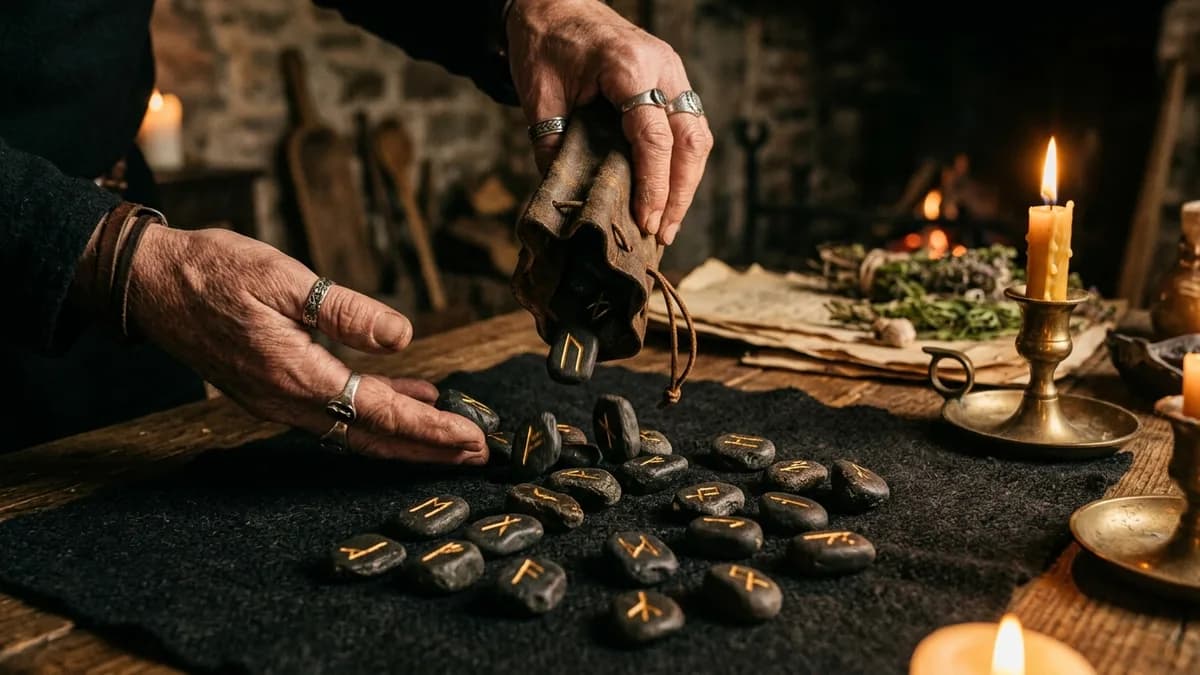
Runes are not just symbols for predicting the future; they are an ancient Germanic and Norse alphabet, where each sign carries a conceptual meaning related to nature, daily life, and the cosmology of ancient peoples. When we work with runes, we work with the Elder Futhark – the oldest form of the runic alphabet.
Structure of the Elder Futhark
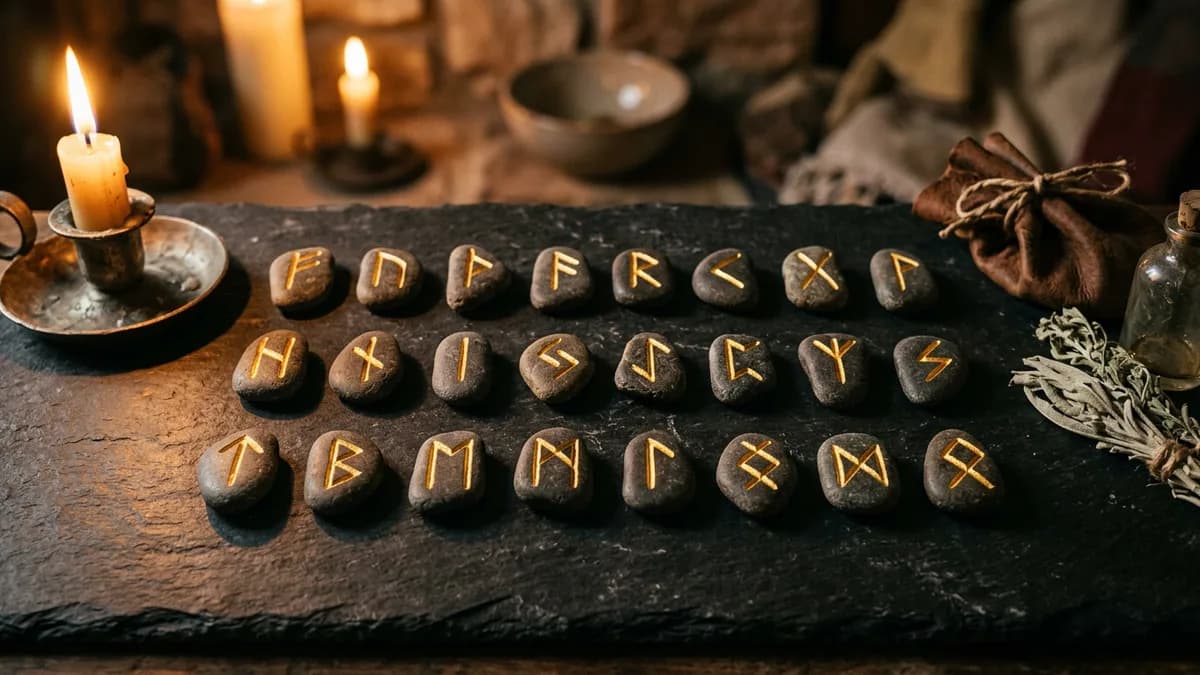
The system consists of 24 symbols. Unlike cards, which are usually made of paper, runes are traditionally crafted from natural materials – wood, stone, bone, or clay. This gives them a specific tactile feel and a sense of weight. To delve into the depth of each symbol, you can explore the full meaning of the 24 runes (Elder Futhark).
The twenty-four runes are divided into three groups of eight, called aettir. Each group is dedicated to a different deity and describes a different stage of human and spiritual development. The first aett (of Freyr) deals with the material world and creation. The second aett (of Heimdall) describes the clash with the forces of nature and fate, and the third aett (of Tyr) focuses on spiritual growth, justice, and human community. You can read more about this structure in the article on the three aettir of the runes and their meaning.
How Runes Speak
The language of runes is direct, concise, and often uncompromising. They are not particularly interested in your momentary emotions or what you will wear tomorrow. They show the energetic foundation of the situation. If you ask about a financial project, the rune Fehu will show you the available wealth and resources, but the rune Isa will tell you unequivocally: "Stagnation. Things are frozen."
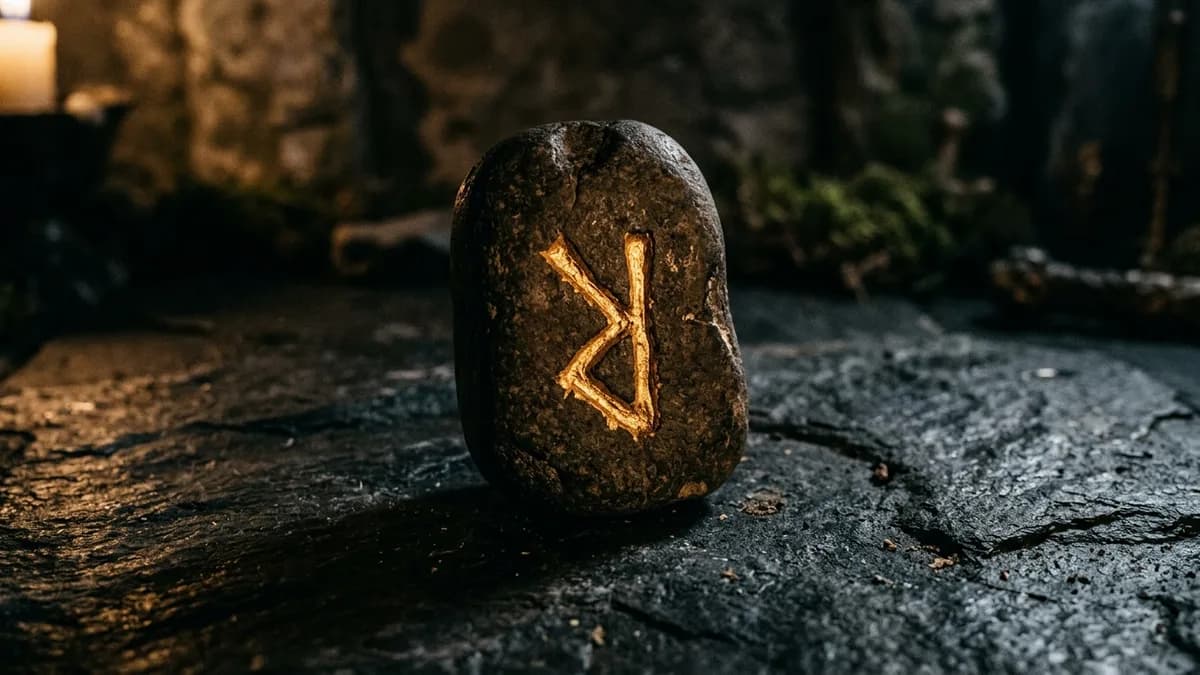
An important feature of runes is that many of them have a direct and reversed position. Asymmetrical runes change their meaning when they appear reversed (merkstave), often indicating a blockage, lack of energy, or a warning. In contrast, symmetrical runes (like Gebo, Isa, Jera, Sowilo) look the same and their meaning does not reverse, but it can be softened or strengthened by neighboring runes. Understanding these nuances is key, as explained in the material on reversed runes (merkstave) – meanings and interpretation.
What are Runes Best For?
- Analysis of personal potential and inner blockages: Runes show where energy flows freely and where it is blocked.
- Fundamental life changes: When it comes to changing residence (Raidho), creating a home (Othala), or radical transformation (Dagaz).
- Questions about protection and boundaries: Runes like Algiz and Thurisaz are excellent indicators of whether you are protected or need to defend yourself.
- Spiritual work: Connection with the subconscious, fate (Urd), and natural cycles (Jera).
Tarot: The Psychological Mirror and the Human Journey
Tarot is perhaps the most recognizable divination system in the world. Unlike runes, which originated as an alphabet, Tarot emerged in Europe during the Renaissance, initially as a card game, before being adapted for esoteric and divinatory purposes in the 18th and 19th centuries.
Structure of Tarot
A standard Tarot deck contains 78 cards, divided into two main groups:
- Major Arcana (22 cards): These represent the "Fool's Journey" – major life lessons, karmic events, and deep psychological archetypes (e.g., Death, The Tower, The Lovers).
- Minor Arcana (56 cards): Divided into four suits (Wands, Cups, Swords, Pentacles), they describe everyday situations, thoughts, emotions, actions, and material matters. Each suit also has Court Cards (Page, Knight, Queen, King), which often represent specific people or types of behavior.
How Tarot Speaks
If runes are like a hammer blow on an anvil, Tarot is like a complex novel. Tarot cards are extremely visual. They speak through the symbolism of the images, colors, and scenes depicted on them. Tarot is unsurpassed in showing the nuances of the human psyche. It won't just tell you if someone will return to you, but also what their inner fears, hidden motives, and emotional barriers are.
In Tarot, cards can also be read reversed, which usually signifies a delay in the card's energy, an internalization of the process, or a descent into its shadow aspect.
What is Tarot Best For?
- Complex relationships: Love triangles, family conflicts, dynamics between colleagues. Tarot shows what the other person is thinking and feeling.
- Psychological analysis: Why do I keep making the same mistakes? What lies behind my anxiety?
- Tracking processes: How a situation will unfold step by step.
- Multiple options: When you have to choose between two or more paths, Tarot can play out a "what if" scenario for each.
Lenormand: The Pragmatic Language of Everyday Life
The Lenormand system (named after the famous French fortune-teller Marie Anne Lenormand, although created after her death) is fundamentally different from both Tarot and Runes. It originated from a German parlor game called "The Game of Hope," created in the late 18th century.
Structure of Lenormand
The Lenormand deck is small and compact – it contains only 36 cards. The images on them are extremely simple and literal: Dog, House, Ship, Tree, Fox, Ring. There are no complex esoteric symbols, astrological signs (in the classic version), or kabbalistic references, as we often find in Tarot.
How Lenormand Speaks
While Tarot is read by looking deeply into one card, Lenormand is read like a language. A single card by itself means almost nothing specific. Lenormand cards are always read in combination, usually in pairs or triplets, forming sentences. The first card is the noun, the second is the adjective.
For example: the card House (home, family, building) + the card Ship (journey, abroad, distance) can mean "moving abroad" or "buying a vacation property." If we reverse the order: Ship + House, this more likely means "returning home from a trip."
Reversed cards are not typically used in Lenormand. The meaning of a card is changed solely by the neighboring cards. The card Dog (friend) next to the card Snake (betrayal, lie) clearly indicates a "false friend."
What is Lenormand Best For?
- Specific events and facts: Will I sign the contract? Will I sell the car?
- Finding lost items: Lenormand is unsurpassed in showing locations (e.g., Book + House = in the library or with documents at home).
- Quick and clear answers: When you don't need psychological analysis, but a simple "what will happen."
- The Grand Tableau: A specific layout where all 36 cards are used simultaneously to see the full picture of the querent's life for a certain period.
Runes, Tarot, or Lenormand – Which System Works Best for Which Questions?
To truly understand the dilemma of "runes vs. tarot" or when to reach for Lenormand, let's look at the most frequently asked questions in real practice and how each system approaches them.
1. Questions about love and relationships
Tarot is the undisputed king here if you want depth. If you ask, "What does he feel for me?", Tarot might reveal the Nine of Swords (he is anxious and can't sleep because of the situation) or the Two of Cups (mutual attraction). Tarot shows emotional baggage and intentions.
Lenormand will not delve into his childhood traumas. If you ask the same question, Lenormand might show Rider + Heart + Letter. This is read literally: "A love message/invitation is coming." Lenormand shows the action, not so much the inner monologue.
Runes will show the energetic compatibility and the foundation of the relationship. If you draw Gebo, it's a sign of equal partnership and exchange. If you draw Hagalaz, it signifies a destructive crisis that will shatter illusions. Runes won't tell you if he'll text you, but they will tell you if this relationship is constructive or toxic for your life path.
2. Questions about career, business, and finances
Lenormand shines brightly in business questions. "Will I get the promotion?" – Bear + Fox + Anchor (Stability in the corporate environment and great success). Lenormand can show specific professions, contracts (Ring card), and cash flow (Fish card).
Tarot will show the workplace dynamics. It can reveal office intrigues (Seven of Swords), the need for teamwork (Three of Pentacles), or burnout from too many responsibilities (Ten of Wands). Tarot is great for questions like "How can I improve my relationship with my boss?"
Runes approach business as survival and building. Fehu is the rune of movable wealth and money earned through hard work. Tiwaz signifies the need for leadership, focus, and risk-taking. If you ask about a new business, runes will show you if you have the personal strength to carry it through.
3. Questions about spiritual development and self-knowledge
Runes are perhaps the most powerful tool here. They are a direct connection to archetypal forces. Questions like "What is my karmic lesson right now?" receive clear answers through runes like Eihwaz (transformation and transition) or Perthro (fate, hidden things, mystery). To learn how to ask such questions and lay out runes, you can explore how to divine with runes – step-by-step spreads.
Tarot (especially the Major Arcana) is also a magnificent tool for spiritual analysis, meditation, and shadow work. The Hermit, Hierophant, or High Priestess cards offer deep guidance for inner life.
Lenormand is generally not suitable for such questions. Its language is too earthly. Asking Lenormand about your spiritual enlightenment is like using accounting software to write poetry – it's possible, but the tool isn't designed for it.
4. Time and deadlines: When will it happen?
Determining time is difficult in any system, but the approaches differ:
- Lenormand has specific cards for time. Clover means quickly (days), Tree means slowly (years), Lilies point to winter, Sun – to summer.
- Tarot often uses astrological correspondences or the suits (Wands = days/summer, Swords = weeks/autumn, Cups = months/spring, Pentacles = years/winter), but this depends on the school.
- Runes dislike human time. For them, time is cyclical. Jera means a cycle of one year or "when the harvest ripens" (when you have finished the work). Dagaz is a sudden change, the moment of dawn. Isa means time has stopped and the process is frozen.
Structural Comparison: Symbols, Meanings, and Information Volume
To systematize the differences, here is a clear table comparing the three systems by key indicators:
| Characteristic | Runes (Elder Futhark) | Tarot | Lenormand |
|---|---|---|---|
| Number of symbols | 24 (divided into 3 aettir) | 78 (22 Major, 56 Minor Arcana) | 36 cards |
| Main focus | Energy, archetypes, natural cycles, personal capacity | Psychology, emotions, spiritual journey, complex situations | Everyday life, facts, events, specific actions |
| Reading method | Synthesizing energies; direct interpretation of the symbol | Visual and intuitive analysis; storytelling | Syntactic (like language); cards are read in pairs/triplets |
| Reversed meanings | Yes (for asymmetrical runes - merkstave) | Yes (at the reader's discretion) | No (meaning depends on neighboring cards) |
| Suitable for "Yes/No" | Possible, but often gives an answer "Depends on your actions" | Possible, but requires clear pre-set rules | Excellent (cards are clearly positive, negative, or neutral) |
Practical Example: One Question Through Three Systems
To illustrate the difference clearly, let's ask the same hypothetical question to the three systems. The question is: "What are the prospects for my new business idea?"
If we cast Runes (3-rune spread):
Fehu (Fehu) + Uruz (Uruz) + Wunjo reversed (Wunjo merkstave)
Interpretation: There is real financial potential (Fehu) and it will require a huge amount of raw physical and vital energy from you to get it moving (Uruz). However, the process will not bring you joy or satisfaction initially (Wunjo reversed). The message is: "You will make money and you have the strength to do it, but it will be hard work without pleasure."
If we draw Tarot (3-card spread):
Page of Pentacles + Eight of Pentacles + Three of Wands
Interpretation: You are at the very beginning, learning new skills and exploring the market (Page of Pentacles). You will face a period of very diligent, monotonous work and attention to detail (Eight of Pentacles). If you get through this, you will reach a stage where you will plan expansion and await the results of your labor (Three of Wands). The message focuses on the process of learning and working.
If we draw Lenormand (3-card line):
Bear + Fox + Anchor
Interpretation: This business will require a strong financial backing or investor (Bear). You need to be very clever, watch out for competition, or apply an unconventional strategy (Fox). If you do this, the business will become established and bring you long-term stability (Anchor). The message is purely strategic and factual.
As you can see, no system contradicts the others. All indicate that the idea has potential but requires work. The difference is in the nuance: runes speak of your personal energy, Tarot speaks of developmental stages, and Lenormand gives business advice on funding and strategy.
Can the Systems Be Combined?
The short answer is: Yes, absolutely. Many experienced practitioners use two, and sometimes all three systems together. However, it's important that this is not done chaotically. If you simply throw Tarot cards, then throw runes on top of them, and arrange Lenormand next to them, you will get informational noise and confusion.
The correct way to combine them is by dividing their functions. Here are a few tried-and-true methods:
- Tarot as the main picture, Rune for focus: Lay out a standard Celtic Cross with Tarot to see all the psychological and situational aspects of the problem. Then draw a single rune that will show you what energy you need to cultivate within yourself to deal with the situation. If you want to try this method right away, you can do a free rune casting with our tool.
- Lenormand for "What," Tarot for "Why": Use Lenormand to see the facts. For example, the cards show that a conflict is coming at work. Then draw Tarot cards to understand the hidden motives of colleagues and how to react emotionally.
- Runes for foundation, Lenormand for details: Cast runes to understand if a period is favorable for action. If the runes give the green light (e.g., Tiwaz and Sowilo), use Lenormand to plan the specific steps (who to talk to, when to sign).
How to Choose Your First Divination System
If you are a complete beginner and wondering where to start, the choice should be based on your personal way of perceiving information and the type of questions you most often ask yourself.
Choose Tarot if:
You think in pictures and stories. You enjoy analyzing human behavior, are interested in psychology, and are inclined to seek the deep reasons behind events. Tarot is visually rich and develops intuition through associations.
Choose Lenormand if:
You have an analytical mind, love specificity, and hate ambiguity. If you prefer answers like "you will meet a person on the road" over answers like "you will rediscover your inner child," Lenormand is your system. Learning Lenormand is like learning a foreign language – it requires memorizing keywords and combination rules.
Choose Runes if:
You have an affinity for nature, minimalism, and direct messages. Runes are excellent for people seeking a tool for personal development and are ready to hear the truth, even when it's raw. Working with runes is more tactile. To start correctly, we recommend reading our Runes – A Complete Beginner's Guide to Divination.
Regardless of which system you choose, remember that mastery takes time. Do not try to learn all three at once. Choose one, dedicate at least a few months of regular practice to it, learn its basic rules, and only then, if you feel the need, add another system to your arsenal.
Frequently Asked Questions
Do I need a special gift to start divining with runes, Tarot, or Lenormand?
No. All these systems use universal archetypes and structured meanings. Divination is a skill that is developed through studying the system, practice, and sharpening intuition. It's more like learning a new language than a supernatural ability.
Which system is easiest for beginners to learn?
Many people find Lenormand easiest at first because the meanings of the words are concrete and read according to strict rules. Runes have only 24 symbols to learn, which also seems easy, but their abstract nature requires more reflection. Tarot is the most extensive (78 cards), but the rich illustrations greatly aid intuitive memorization.
Why do runes sometimes give harsher and more categorical answers than Tarot?
Runes are connected to the forces of nature, and nature is not sentimental. If there is an obstacle, runes will show it as ice (Isa) or a storm (Hagalaz). Tarot, being more focused on human psychology, often offers a gentler approach, showing how to emotionally cope with the problem.
Are reversed meanings used in Lenormand, as with runes and Tarot?
In the classic Lenormand school, reversed meanings are not used. The card is what it is. Its positive or negative nuance is determined entirely by the cards that fall around it. For example, the Dog card (friend) is always Dog, but next to the Mice card, it can mean a friend who brings you stress or loss.
Which system should I choose for "Yes" or "No" questions?
Lenormand is the most categorical for "Yes/No" questions, as the cards are traditionally divided into positive, negative, and neutral. Runes and Tarot are more suitable for open-ended questions (e.g., "What will happen if..."), as their answers are often nuanced and show the conditions under which things would happen.
Can I make my own runes, or do I have to buy them?
Crafting your own runes (from wood, pebbles, or clay) is highly recommended in the runic tradition. This process creates a personal energetic connection between you and the symbols, which aids in more accurate and deeper readings.
Divination with runes is a tool for self-knowledge and reflection. The information in this article is for educational purposes and does not replace professional medical, psychological, or financial advice. For important life decisions, consult a specialist.
Comments
Related Guides
Explore more guides in Guides
How to Read Runes - Step-by-Step Guide
In short: Successful rune readings begin with a well-formulated question – open-ended questions focused on action and self-reflection yield the most accurate answers…
Meaning of the 24 Runes (Elder Futhark)
In brief: The Elder Futhark is an ancient system of 24 runes used for writing and divination, divided into three groups of eight runes called aettir. Each rune meaning…
Reversed Runes (Merkstave) - Meanings and Interpretation
In short: Reversed runes (merkstave) are not a curse or bad omen; they indicate blocked energy, delays, or an internal process requiring attention. Of the 24 runes in…