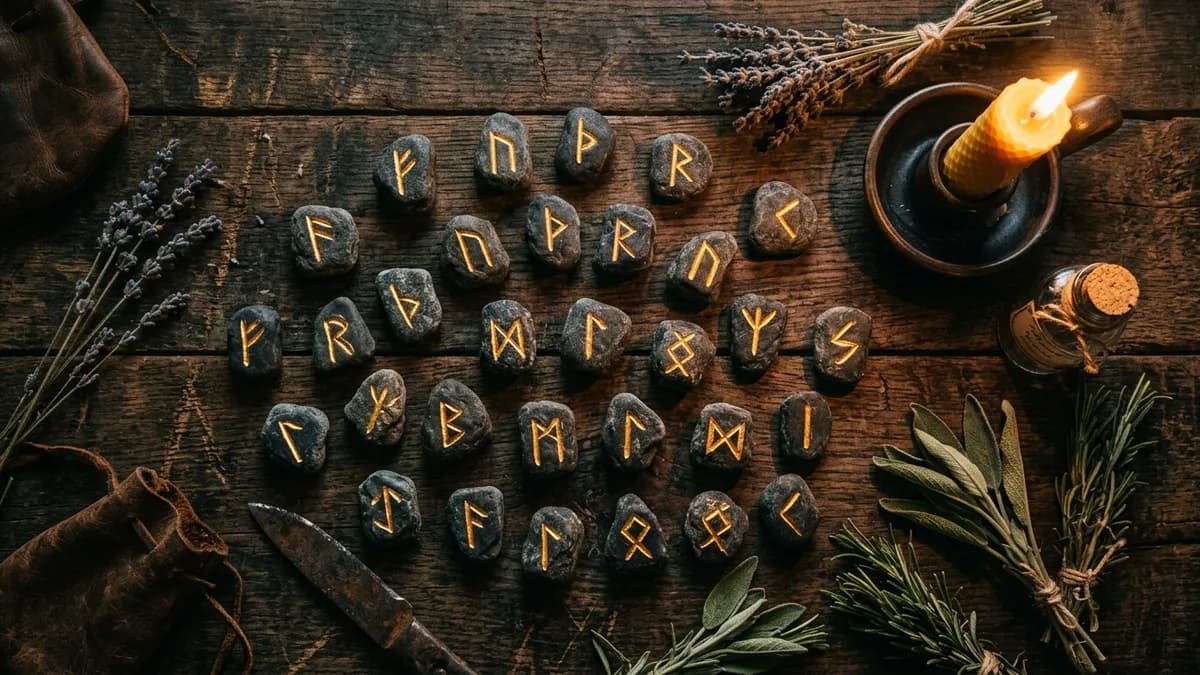
Runes: A Complete Beginner's Guide to Divination
In short:
- Runes are an ancient Germanic alphabet used for writing, divination, and symbolic magic.
- The most popular system is the Elder Futhark, consisting of 24 symbols divided into three groups of eight, called aettir.
- Each rune carries a specific meaning related to nature, human life, and Norse mythology (e.g., Fehu for wealth, Isa for stagnation).
- Rune divination requires clear questions and an understanding of context. They indicate current energies and possible paths, not a fixed future.
- Some runes have an inverted meaning (merkstave), which usually points to blockages, delays, or inner conflicts.
Origin and Essence: What are Runes
If you're wondering what runes are, the answer lies deep in the history of Northern Europe. The word "rune" (runa) itself in ancient Germanic languages means "secret," "whisper," or "mystery." Before they became a tool for self-discovery as we know them today, they were a writing system used by Germanic tribes between the 150th and 800th year AD.
According to Norse mythology, runes were not invented by humans but discovered. Legend tells that the supreme god Odin hung, pierced by his own spear, on the World Tree Yggdrasil for nine days and nine nights. He made this sacrifice to gain the wisdom of the runes from the depths of the Well of Fate. This story sets the tone for the entire system – runes require effort, focus, and a willingness to look truth in the eye.
Historically, the Roman historian Tacitus describes in his work "Germania" how local tribes would cut branches from fruit-bearing trees, cut them into small pieces, mark them with signs, and throw them onto a white cloth to seek advice from the gods. This ancient method is the basis of modern rune divination.
Elder Futhark: The Alphabet of Divination
There are several different runic alphabets (Younger Futhark, Anglo-Saxon Futhorc), but when we talk about runes for beginners and divination, we almost always mean the Elder Futhark. The name "Futhark" comes from the first six letters of the alphabet: F (Fehu), U (Uruz), T (Thurisaz), A (Ansuz), R (Raido), K (Kenaz).
The Elder Futhark consists of exactly 24 runes. Each has a phonetic value (sound), but more importantly for divination, each carries an ideographic meaning. This means the symbol represents an entire concept. For example, the rune Fehu is not just the letter "F"; it is the concept of cattle, movable property, and consequently – wealth and resources. To deeply understand each symbol, you can explore the full meaning of the 24 runes (Elder Futhark).
The Three Aettir and Their Meaning
The twenty-four runes are not arranged randomly. They are divided into three groups of eight runes each. Each group is called an "aett" (from Old Norse aett, meaning family or kin). This division greatly aids in memorizing and interpreting the runes, as each aett tells a different part of the human experience.
To delve into the structure of the Futhark, it's helpful to familiarize yourself with the three aettir of the runes and their meanings. Here's a brief overview of these three families:
| Freyja's Aett | The first eight runes. They are related to the creation of the world, basic human needs, physical survival, resources, primal power, and communication. This is the foundation of life. |
| Heimdall's Aett | The second eight runes. They represent the forces of nature, karma, challenges we cannot control, and the ways we adapt to them. Here are the runes of transformation and trials. |
| Tyr's Aett | The last eight runes. The focus here is on the human condition, society, spiritual development, justice, family, and ultimate enlightenment. This is the stage of maturity. |
How to Begin: Preparation for Beginner Runes
Before you start casting runes, it's good to prepare yourself physically and mentally. Runes are a direct tool. They don't soften the blow or speak in riddles. If you seek comfort, they might give you the raw reality.
The first step is to acquire a set. You can buy them or make them yourself. Traditional materials are wood, stone, bone, or clay. Crafting your own runes (by burning them onto wooden discs or drawing them on river stones) creates a strong personal connection with the tool. Once you have your set, find a special place for it – a pouch made of natural fabric (linen, cotton, leather) or a wooden box.
Many practitioners recommend "cleansing" the runes before their first use and periodically thereafter. This can be done by passing them through the smoke of herbs (sage, mugwort), exposing them to moonlight, or simply holding them with the intention to clear them of foreign energy.
Practical Rune Divination: Step by Step
Actual rune divination requires focus. Unlike Tarot cards, which have rich illustrations, runes are abstract symbols. You need to rely on your memory of their meanings and your intuition to connect them.
1. Formulating the Question
Runes work best with open-ended questions that seek advice or an analysis of a situation. Avoid yes/no questions. Instead of asking "Will I find a new job?", ask "What do I need to change in my approach to find a suitable job?". Instead of "Does he love me?", ask "What is the energy between me and this person right now?".
2. Shuffling and Drawing
Place the runes in their pouch. Close your eyes, focus on your question, and shuffle the runes with your hand. When you feel the moment is right, draw the required number of runes. You can draw them one by one or take a handful and throw them onto a special cloth, reading only those that land face up.
3. Choosing a Layout (Spread)
For beginners, simple spreads are most suitable. The most commonly used is drawing one rune (for daily advice or a quick answer) or a three-rune spread. In a three-rune spread, the positions usually signify: Past (root of the problem), Present (current situation or action to be taken), and Future (likely outcome if things continue in the same vein). For more complex techniques, see how to divine with runes - step-by-step spreads.
If you don't have a physical set at hand but want to practice interpretation or have an urgent question, you can use our free online rune casting, which simulates the drawing process.
Inverted Runes (Merkstave)
One of the most important aspects of interpretation is the rune's position. Of the 24 runes in the Elder Futhark, nine are symmetrical – they look the same regardless of how they fall (e.g., Isa, Gebo, Hagalaz, Sowilo). These runes have no inverted meaning.
The remaining fifteen runes are asymmetrical. When you draw such a rune and it lands "upside down," it is called a merkstave (dark branch). An inverted rune rarely means something fatal or entirely opposite to its upright meaning. It more often indicates a blockage, delay, an inner problem that has not yet surfaced, or energy being used incorrectly.
For example, the upright rune Fehu means financial inflow and abundance. Inverted Fehu doesn't necessarily mean bankruptcy, but rather financial difficulties, poor resource management, or a feeling of lack, even if you have enough. To understand the nuances of these states, read more about inverted runes (merkstave) - meanings and interpretation.
A Brief Overview of the 24 Runes
To begin your rune divination, here is a basic glossary of the meanings of all 24 runes of the Elder Futhark, divided by aettir.
Freyja's Aett (Matter and Creation)
- Fehu: Cattle. Wealth, money, material possessions, energy that needs to circulate. Inverted: Financial losses, greed, resource stagnation.
- Uruz: Wild ox. Primal physical strength, health, untamed energy, courage, sudden changes. Inverted: Weakness, missed opportunities, lack of will.
- Thurisaz: Thorn / Thor's Hammer. Protection through attack, conflict, breaking barriers, reactive force. Inverted: Danger, defenselessness, betrayal, malice.
- Ansuz: The God (Odin). Communication, wisdom, inspiration, messages, advice from elders or authorities. Inverted: Lies, manipulation, lack of communication, bad advice.
- Raido: Wagon / Road. Journey (physical or spiritual), movement, rhythm, the right course of things, logic. Inverted: Postponed plans, dead end, illogical actions.
- Kenaz: Torch. Illumination, knowledge, creativity, revealing secrets, technical skills. Inverted: Loss of direction, creative block, hiding the truth.
- Gebo: Gift. Partnership, exchange, balance between giving and receiving, contracts, love relationships. (No inverted meaning).
- Wunjo: Joy. Success, harmony, satisfaction, fulfilled desires, belonging to a group. Inverted: Sadness, depression, alienation, unrealistic expectations.
Heimdall's Aett (Nature and Challenges)
- Hagalaz: Hail. Sudden destruction, forces beyond your control, a crisis that clears out the old to make way for the new. (No inverted meaning).
- Nauthiz: Need / Friction. Limitations, delays, patience, necessity versus desire. A lesson to be learned through hardship. (No inverted meaning, though some practitioners read it inverted as extreme lack).
- Isa: Ice. Stagnation, pause, freezing of plans, concentration, psychological block. A time for waiting, not acting. (No inverted meaning).
- Jera: Year / Harvest. Cyclicality, the result of past efforts, fair reward, slow but steady progress. (No inverted meaning).
- Eihwaz: Yew (World Tree). Transformation, endurance, connection between worlds, protection in difficult times. The end of one and the beginning of another. (No inverted meaning).
- Perthro: Dice cup / Womb. Mystery, hidden things, fate, occult abilities, gambling, unpredictability. Inverted: Revealed secrets, unpleasant surprises, stagnation.
- Algiz: Elk / Protection. Divine protection, self-preservation instinct, warning of danger, spiritual guide. Inverted: Hidden threat, vulnerability, ignoring intuition.
- Sowilo: Sun. Success, vitality, victory, clarity, burning energy. A powerful positive force. (No inverted meaning).
Tyr's Aett (Human and Spirituality)
- Tiwaz: God Tyr / Spear. Justice, honor, leadership, masculine energy, victory through sacrifice and adherence to rules. Inverted: Injustice, lack of motivation, giving up in the face of difficulties.
- Berkana: Birch. Growth, feminine energy, motherhood, new beginnings, healing, care, physical and spiritual purification. Inverted: Family problems, delayed growth, illness.
- Ehwaz: Horse. Trust, teamwork, loyalty, rapid progress, moving, synergy between two people. Inverted: Lack of trust, disharmony, blocked movement.
- Mannaz: Man. Community, human intellect, self-knowledge, your relationship with others and theirs with you, social connections. Inverted: Isolation, selfishness, conflict with others, lack of help.
- Laguz: Water. Intuition, emotions, subconscious, hidden currents, flexibility, dreams. Diving into the unknown. Inverted: Emotional imbalance, fear, bad premonitions, manipulation.
- Inguz: God Ing. Fertility, completion of a cycle, gathering energy before a new leap, potential, security. (No inverted meaning).
- Othala: Inheritance / Home. Traditions, ancestors, real estate, spiritual roots, what you leave behind. Inverted: Loss of property, family conflicts, detachment from roots.
- Dagaz: Day / Dawn. Breakthrough, sudden positive change, awakening, balance between light and darkness, hope. (No inverted meaning).
The Difference Between Runes and Other Systems
If you already have experience with other divinatory systems, you might be wondering how runes fit into this picture. Runes are extremely direct. While Tarot cards can tell you a long, psychological story about your emotional state, runes will give you the raw fact.
Tarot is like a novel – full of details, characters, and hidden motives. Lenormand is like a telegram – short and clear information about daily life. Runes are like advice from a stern but fair elder. They are not interested in what you want to hear, but in what you need to know. They work with primal energies – ice, fire, water, earth. For a more detailed analysis of which system is most suitable for you at any given moment, see the article Runes vs. Tarot and Lenormand - Which System to Choose.
One of the greatest advantages of runes is their flexibility. You can carry them in your pocket, throw them on the ground in the forest, or lay them out on your desk. They are sturdy, connected to the earth, and require you to be just as firmly grounded when interpreting their messages.
Frequently Asked Questions
Can runes predict the future with 100% accuracy?
No. In Norse philosophy, the future is not entirely fixed. There is the concept of "Urd" (what was) and "Verdandi" (what is happening), which shape "Skuld" (what should become). Runes show the most likely outcome based on your current actions and energies. If you change your actions, you change the outcome.
Do I need to have Scandinavian roots to divine with runes?
Absolutely not. Although runes originate from Germanic peoples, the archetypes they describe (need, joy, conflict, growth) are universal to the entire human experience. Anyone who approaches them with respect and a desire to learn can work with them.
Is it dangerous to divine with runes?
Runes themselves are just symbols on a material. They do not carry "evil" within them. The danger comes from becoming too dependent on them and ceasing to make your own decisions, or from interpreting every inverted rune as a fatal omen. Use them as advisors, not as masters.
What should I do if I draw a "bad" rune?
There are no entirely "bad" symbols in runes. Even runes like Hagalaz (destruction) or Thurisaz (conflict) carry necessary energy. The destruction of Hagalaz clears the way for something new. If you draw a difficult rune, accept it as a warning about where you need to be careful or what lesson awaits you, not as a curse.
Can I ask the same question multiple times?
It is not recommended. If you ask a question and don't like the answer, re-casting will only confuse the energy and give you a meaningless result. Accept the first answer, reflect on it, and if the situation changes significantly later, then you can ask again.
What does it mean if a rune falls off the cloth or out of my hands?
Many practitioners believe that runes that "jump out" on their own or fall outside the designated divination area carry the most important message. These are called "jumping runes" and usually indicate something you are stubbornly refusing to see or an energy that is trying to grab your attention immediately.
Rune divination is a tool for self-discovery and reflection. The information in this article is for educational purposes and does not replace professional medical, psychological, or financial advice. For important life decisions, consult a specialist.
Comments
Related Guides
Explore more guides in Guides
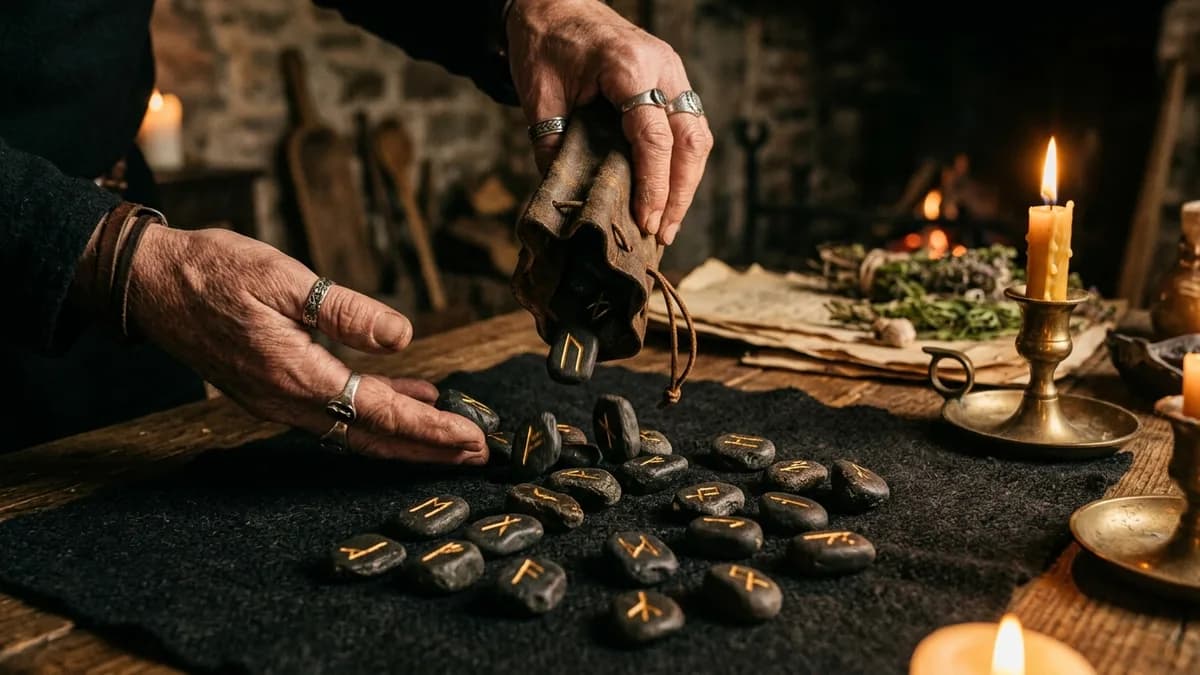
How to Read Runes - Step-by-Step Guide
In short: Successful rune readings begin with a well-formulated question – open-ended questions focused on action and self-reflection yield the most accurate answers…
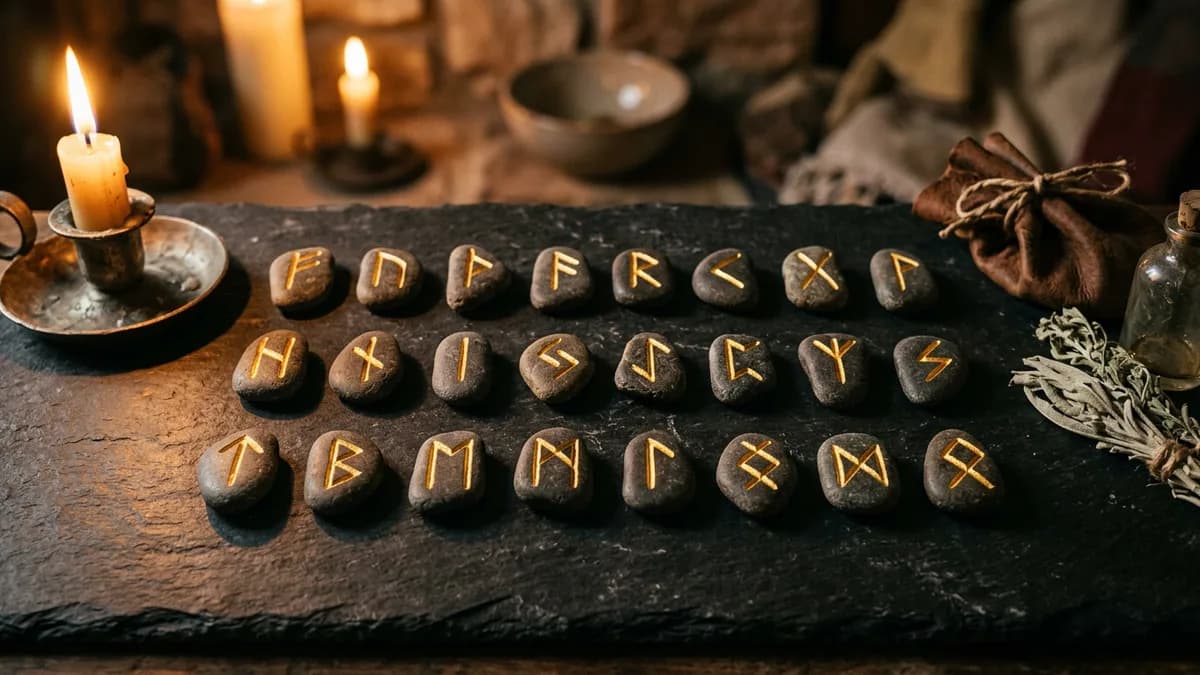
Meaning of the 24 Runes (Elder Futhark)
In brief: The Elder Futhark is an ancient system of 24 runes used for writing and divination, divided into three groups of eight runes called aettir. Each rune meaning…
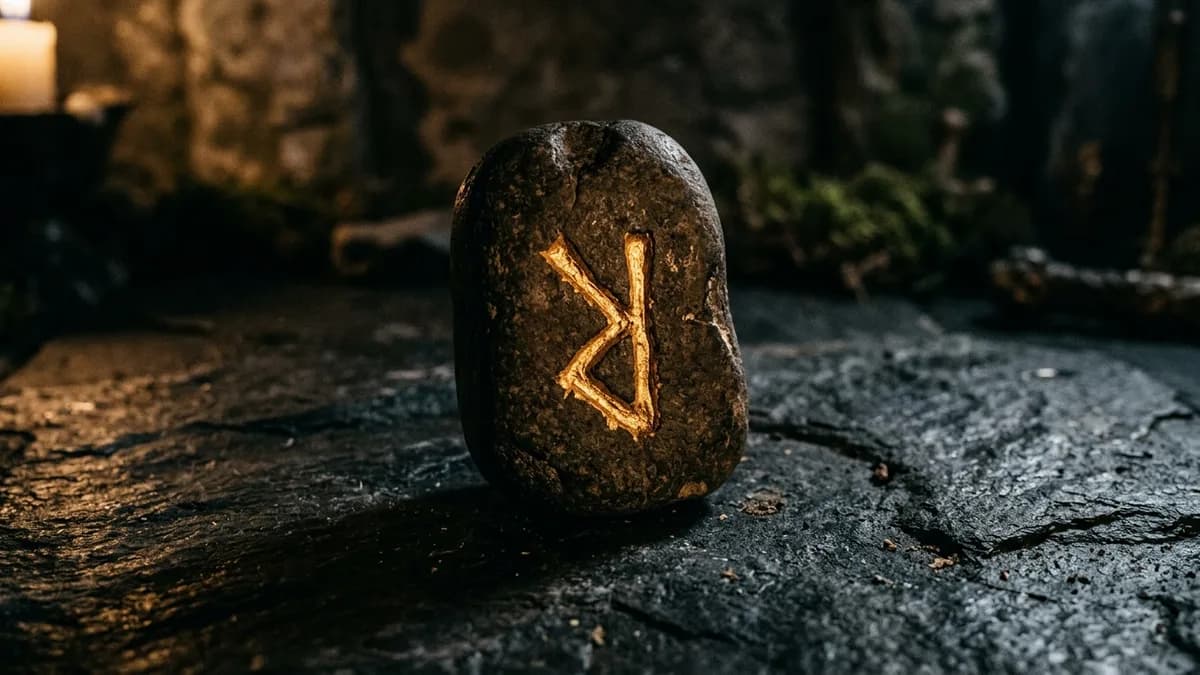
Reversed Runes (Merkstave) - Meanings and Interpretation
In short: Reversed runes (merkstave) are not a curse or bad omen; they indicate blocked energy, delays, or an internal process requiring attention. Of the 24 runes in…