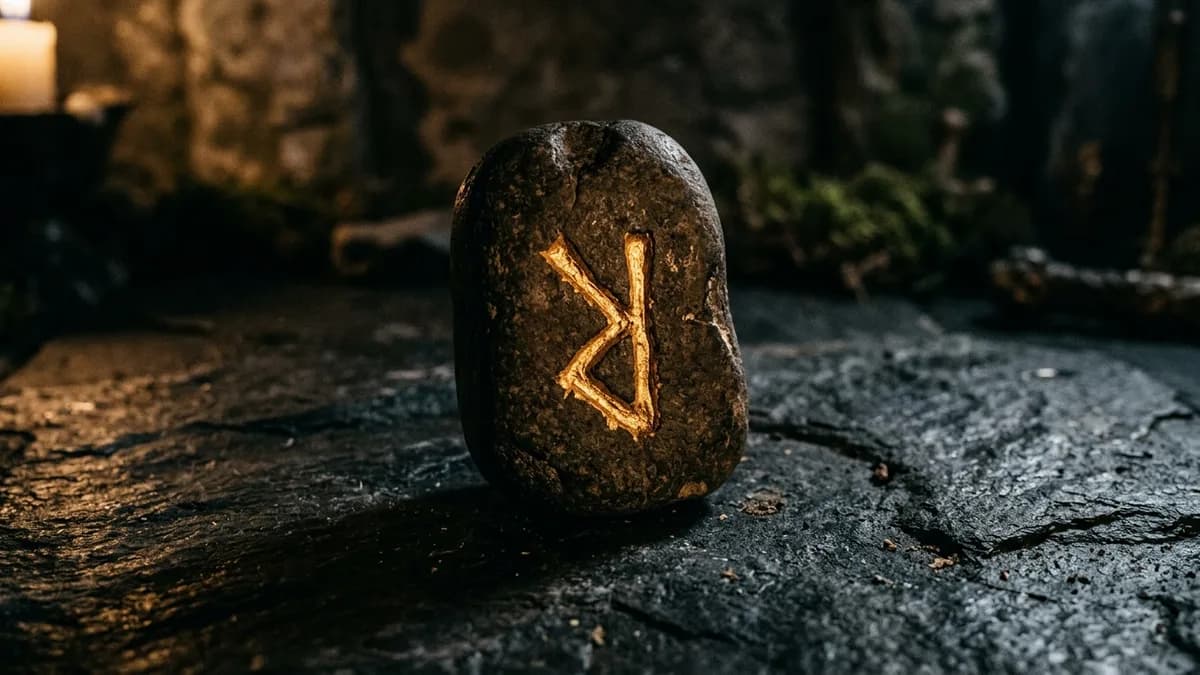
Reversed Runes (Merkstave) - Meanings and Interpretation
In short:
- Reversed runes (merkstave) are not a curse or a bad omen; they indicate blocked energy, delays, or an internal process that requires attention.
- Out of the 24 runes in the Elder Futhark, 15 have a clearly defined reversed position, while 9 are symmetrical (like Gebo, Isaz, Jera) and their meaning remains the same, regardless of how they fall.
- Interpreting reversed runes requires examining the root of the problem – whether the energy is directed inward, if there are external obstacles, or if a change in your approach is needed.
- Context is key. A reversed rune is always read in relation to the other runes in the spread to understand the full picture of the situation.
The Essence of Reversed Runes (Merkstave) and Why They Are Not a Cause for Fear
When you begin to study the Elder Futhark, one of the first things you notice is the shape of the symbols themselves. Some of them look the same no matter how you look at them, while others have a clear direction – up or down. When you cast or draw runes, you will inevitably encounter a situation where a symbol appears upside down. This state is called merkstave – a term that often causes unnecessary anxiety for beginners.
The word merkstave comes from Old Norse and literally means "dark stick" or "dark sign." In modern rune divination, this term is used to denote a reversed rune. It is important to immediately clear up a common misunderstanding: a reversed rune does not automatically mean "something terrible will happen." Runes are a pragmatic system. They are not meant to scare you, but to give you an accurate diagnosis of your current reality.
If a upright rune shows energy flowing freely and manifesting in the external world, a reversed rune shows that same energy, but in a different state of aggregation. It can refer to the meaning of the 24 runes (Elder Futhark), which is temporarily blocked, delayed, directed inward towards yourself, or expresses its shadow (excess or deficiency). Understanding these nuances is what distinguishes mechanical reading from deep, conscious divination.
Four Ways to Interpret a Reversed Rune
When you see runes upside down in front of you, don't rush to make negative conclusions. Instead, apply one of the four basic filters for interpreting a merkstave:
- Blocked Energy: The rune's power is available, but something is preventing it from manifesting. For example, an upright Fehu is wealth in motion. A reversed Fehu is often a financial block – the money is there somewhere, but the flow to you is stopped by a bad decision or an external obstacle.
- Delay in Time: The outcome you are asking about will happen, but not now. A reversed Raido (the rune of the journey) can simply mean a postponed trip or a project that is stuck in place before it picks up again.
- Internal Process (Internalization): An upright rune often acts in the external world. A reversed rune acts within your psyche. An upright Tyr (Tiwaz) is an external battle and justice. A reversed Tyr is an internal struggle, a lack of motivation, or the need to find your own moral compass before acting.
- The Rune's Shadow: Every force has two sides. If an upright rune is the balanced manifestation, a reversed one can be its extreme. Kenaz is the fire of knowledge; reversed, it can be burning fanaticism or complete ignorance (lack of light).
If you want to test how these principles work in practice, you can do a free rune casting and observe which symbols appear reversed and how the context of your question changes their message.
Symmetrical vs. Asymmetrical Runes
Not all runes can be reversed. The Elder Futhark is an extremely elegant system where the geometry of the symbols carries its own meaning. Nine of the twenty-four runes look the same no matter how they fall. They represent forces that are so fundamental that they cannot be "reversed" – they simply are.
| Category | Which are these runes? | Characteristic |
|---|---|---|
| Symmetrical (Do not reverse) | Gebo, Hagalaz, Nauthiz, Isaz, Jera, Eihwaz, Sowilo, Ingwaz, Dagaz | Their shape is the same upright and upside down. They represent inevitable lessons, cosmic laws, or natural cycles. Their energy cannot be stopped or reversed by human will. |
| Asymmetrical (Have Merkstave) | Fehu, Uruz, Thurisaz, Ansuz, Raido, Kenaz, Wunjo, Perthro, Algiz, Tiwaz, Berkana, Ehwaz, Mannaz, Laguz, Othala | They have a clear top and bottom. These runes represent areas of life over which we have more control, choices, emotions, and actions that can be misdirected or blocked. |
Understanding this structure is key when learning how to cast runes – step-by-step guide. When your spread contains mostly symmetrical runes, it's a sign that the situation is beyond your direct control and is being driven by larger forces. When asymmetrical runes (especially reversed ones) prevail, the problem is in your hands and your actions.
Meaning of Reversed Runes from the First Aett (of Freyr)
The First Aett (a group of eight runes) is associated with the god Freyr and governs the material world, creation, basic instincts, and resources. When runes from this aett of runes (aettir) and their meaning fall reversed, they usually signal problems with physical survival, money, life energy, or communication with others.
Reversed Fehu (Fehu Merkstave)
Upright Fehu is a symbol of movable wealth, resources, and earned money. When it appears reversed, Fehu is a classic sign of financial hardship, loss of resources, or poor management of what you own. It doesn't always mean absolute bankruptcy. It often tells you: "Your energy/money is leaking through a hole you don't notice." On an emotional level, reversed Fehu indicates a feeling of deprivation – the sense that whatever you have is not enough. The advice here is to stop impulsive spending, review your budget, and avoid taking new financial risks.
Reversed Uruz (Uruz Merkstave)
Uruz is the wild bull, raw physical strength, and health. Reversed, it is a red flag for exhaustion. Your body is literally saying "stop." It signifies weakness, lack of willpower, or a situation where you are trying to push a wall with bare hands but lack the strength to break it down. In other cases, reversed Uruz indicates aggression that is misdirected – anger that harms yourself instead of solving the problem. Pay attention to your health, rest, and do not force events.
Reversed Thurisaz (Thurisaz Merkstave)
Thurisaz is the thorn, Thor's hammer, protection, and reactive force. When it falls upside down, this protective force turns into self-sabotage. You are the thorn in your own side. Reversed Thurisaz often indicates stubbornness, refusal to listen to reasonable advice, or a situation where you feel defenseless against external attacks. Perhaps you harbor an old grievance that is poisoning you from within. The warning here is: do not act impulsively, as you will make things worse. Your anger is now a bad advisor.
Reversed Ansuz (Ansuz Merkstave)
Ansuz is the rune of Odin, of the word, wisdom, and communication. Reversed Ansuz is noise in the system. It signifies misunderstanding, lies, manipulation, or bad advice. If you are asking about negotiations or a contract, reversed Ansuz screams: "Read the fine print!" Someone might be withholding information from you, or you yourself might not be honest with yourself. It also indicates a lack of inspiration or blocked creative energy for writers and speakers. Do not believe everything you hear during this period.
Reversed Raido (Raido Merkstave)
Raido is the chariot, the journey, rhythm, and control. Reversed, it brings delays. If you are planning a trip, there may be obstacles (canceled flights, car breakdown). In a deeper, life sense, reversed Raido means you have chosen the wrong path or have lost control of the direction your life is moving. Perhaps you are trying to impose your rhythm on a situation that requires flexibility. Stop and re-evaluate your route – literally and figuratively.
Reversed Kenaz (Kenaz Merkstave)
Kenaz is the torch, the light in the darkness, knowledge, and creativity. Reversed Kenaz is an extinguished torch. It signifies a period of confusion, lack of clarity, and creative block. You cannot see the solution to the problem because you are in darkness. In relationships, it can mean the fading of passion or the end of an illusion (the light goes out, and you see reality, however ugly it may be). Do not fear this darkness – it is a temporary state until you find a new spark.
Reversed Wunjo (Wunjo Merkstave)
Wunjo is joy, harmony, and fulfilled desires. When it reverses, joy is overshadowed. It signifies sadness, depression, disappointment from unmet expectations. Often, reversed Wunjo appears when we have invested too much emotion in something external (a person, a job, a goal) and it does not live up to our hopes. It indicates disharmony in a group or family. The lesson here is not to seek happiness in perfectionism, but to accept the situation with its flaws.
(Note: The rune Gebo from this aett is symmetrical and has no reversed position. It always signifies a gift, exchange, and balance, although in a negative context it can warn of an unfair deal).
Meaning of Reversed Runes from the Second Aett (of Heimdall)
The Second Aett is the harshest. It is associated with the god Heimdall and the Norns (fate). Here are found three of the most difficult symmetrical runes (Hagalaz, Nauthiz, Isaz), which represent objective life difficulties. Therefore, there are fewer runes in this aett that reverse, but when they do, their messages are deeply psychological.
(Hagalaz, Nauthiz, Isaz, and Jera are symmetrical and have no merkstave).
Eihwaz – Specific Case
Eihwaz (the World Tree Yggdrasil) is graphically symmetrical, but some runologists believe it can have a slight shift depending on how it is drawn. In the classic sense, it has no reversed position. It is always the axis, transformation, the connection between life and death. Even if you consider it "reversed" (if you mark it intentionally), it would signify resistance to inevitable change or fear of the unknown.
Reversed Perthro (Perthro Merkstave)
Perthro is the dice cup, mystery, fate, and the hidden. Upright Perthro is a pleasant surprise or the revelation of a secret in your favor. Reversed Perthro is an unpleasant surprise. Something hidden comes to light, and you don't like it. It can also mean stagnation – the feeling that fate has given up on you and nothing is happening. It also warns against taking gambling risks, as luck is not on your side at the moment. Do not try to force events; wait for the dust to settle.
Reversed Algiz (Algiz Merkstave)
Algiz is the horns of the elk, divine protection, and the instinct for self-preservation. Reversed Algiz is a clear sign of vulnerability. Your shield is down. You may be in a situation where you are surrounded by toxic people or harmful influences, and you are ignoring the red flags. Sometimes it indicates that you are seeking protection in the wrong place or relying on someone who cannot help you. Increased caution is required – watch your back and do not trust blindly.
(Sowilo, the rune of the sun, is symmetrical and has no reversed meaning).
Meaning of Reversed Runes from the Third Aett (of Tyr)
The Third Aett is ruled by Tyr, the god of justice and sacrifice. This aett focuses on human society, laws, spiritual development, and relationships between people. Reversed runes here often speak of social conflicts, loss of direction, and relationship problems.
Reversed Tiwaz (Tiwaz Merkstave)
Tiwaz is the arrow pointing upwards – purposefulness, justice, masculine energy, and victory. When the arrow points downwards (reversed Tiwaz), motivation is gone. It signifies giving up in the face of difficulties, a lack of competitive spirit, or a sense of injustice. In legal or court matters, it is a bad sign – things may not be decided in your favor. On a personal level, it warns of passivity. You are losing the battle because you are not even trying to fight. Rediscover your "why."
Reversed Berkana (Berkana Merkstave)
Berkana is the birch tree, motherhood, care, and gradual growth. Reversed Berkana is growth that has stopped. A project you have started is not developing. In family matters, it often indicates friction, problems with children, relatives, or a feeling of lack of coziness at home. It can also mean over-parenting that suffocates rather than helps. The soil is not fertile at the moment. You need to clear the "weeds" (old habits or toxic relationships) before you expect new blooming.
Reversed Ehwaz (Ehwaz Merkstave)
Ehwaz is the horse, partnership, loyalty, and moving forward together with another. Reversed Ehwaz indicates a lack of synchronicity. You and your partner (in love or business) are pulling in different directions. Trust has been broken, or communication is lacking. It can also mean a feeling of being stuck in a situation or relationship from which there seems to be no escape. Movement has stopped. An open conversation is needed to understand if the partnership can be repaired, or if your paths must diverge.
Reversed Mannaz (Mannaz Merkstave)
Mannaz is humanity, intellect, community, and the Self. Reversed Mannaz is isolation. You feel detached from others, misunderstood, or rejected by the group. It often indicates that the enemy is not external, but internal – you yourself are sabotaging yourself through negative thoughts or selfishness. It can mean a lack of support at a time when you need it. The advice here is not to expect help from outside, but to rely on yourself. Look inward and clear your own motives.
Reversed Laguz (Laguz Merkstave)
Laguz is water, emotions, intuition, and the subconscious. Reversed Laguz is turbulent or stagnant water. Your intuition is blocked, or you are ignoring it in favor of cold (but wrong) logic. It often signifies an emotional breakdown, excessive sensitivity, or escapism through harmful habits. You may be subject to manipulation, or you may be deceiving yourself. The water is flowing against you. You need to find emotional balance and stop swimming against the current.
(Ingwaz is symmetrical and has no reversed meaning).
Reversed Othala (Othala Merkstave)
Othala is inheritance, home, traditions, and real estate. Reversed Othala indicates problems with roots. Family disputes (often over property or inheritance), a feeling of homelessness, or alienation from one's kin. It can warn of a bad real estate investment or problems with the house itself (repairs, accidents). In a deeper sense, reversed Othala asks you: "Are you too attached to the past?" Sometimes you need to let go of outdated family patterns to move forward.
(Dagaz is symmetrical and has no reversed meaning).
Practical Examples: Reading Reversed Runes in Context
Knowing the theory is one thing, but applying it is another. To truly understand the meaning of a reversed rune, you need to see it in action. This is why it is useful to read runes – a complete beginner's guide to divination, which explains the importance of spreads. Let's look at a classic example with a three-rune spread (Past, Present, Future) for a career-related question.
Question: "How will my current project at work develop?"
Drawn runes: Upright Fehu (Past) – Reversed Raido (Present) – Upright Wunjo (Future).
- Past (Upright Fehu): The project started well. There was funding, resources, and a clear material goal. The foundation is solid.
- Present (Reversed Raido): Here is the problem. Reversed Raido indicates that the project is currently stalled. There is a delay, a lack of control, or the team has gone in the wrong direction. Things are not going according to plan.
- Future (Upright Wunjo): Despite the current setbacks, the final outcome is joy and success. Wunjo signifies a harmonious completion.
Interpretation: Do not panic about the current stagnation (Reversed Raido). The delay is temporary and likely necessary to correct the course. Do not force things now. Once you overcome this logistical hurdle, the project will bring the desired satisfaction (Wunjo), based on the good start (Fehu).
If the present rune had been Reversed Fehu instead of Raido, the problem would have been a lack of budget, not a logistical delay. Context changes everything.
Should We Use Reversed Runes At All?
This is a question that often arises, especially when people compare different divination systems. If you are wondering about the differences, you can check out the article runes vs. Tarot and Lenormand – which system to choose. In Tarot, reversed cards are a matter of the reader's personal choice. With runes, the situation is a bit different.
Historically, there is no firm evidence that ancient Germanic tribes read runes upside down. The practice of merkstave is more modern (from the 20th century onwards), introduced to provide more nuance in divination.
You have two choices:
- Read all runes as upright: In this case, you rely entirely on the rune's position in the spread and its relationship with the others to understand whether the energy is positive or negative. For example, an upright Fehu next to Hagalaz (destruction) would mean financial loss anyway, without Fehu needing to be reversed.
- Use reversed runes: This is the recommended method for most modern practitioners. It provides a direct, visual indication of where the problem lies. A reversed rune immediately catches the eye and tells you: "Look here, there is a blockage here."
The advice for beginners is to start by using reversed runes. This helps in faster assimilation of the dual nature of each symbol. As you progress and develop strong intuition, you may feel that you no longer need them, as you understand the shadow side of a rune even when it is upright.
Frequently Asked Questions
Is it mandatory to read runes reversed?
It is not mandatory. Some experienced runologists read all runes as upright and rely on context and neighboring symbols to determine if the energy is constructive or destructive. However, for beginners, using reversed positions (merkstave) is highly recommended as it provides clearer and more specific answers.
What should I do if a rune falls sideways (horizontally)?
When casting runes (instead of drawing and laying them out), they often fall at an angle or sideways. The general rule is: if the top of the rune points upwards or to the right, it is read as upright. If it points downwards or to the left, it is read as reversed. Another approach is to interpret it as energy in transition – something that is still forming and is not yet definitively good or bad.
Can a reversed rune mean something good?
Yes, although less often. A reversed rune can mean that a negative process has been stopped. For example, if you are asking about someone who is harming you, a reversed Tiwaz (lack of strength/victory) for them means they will not succeed in their intentions against you. Also, reversed runes often point to deep inner work, which, although difficult, leads to spiritual growth.
How do I know if the problem is external or internal?
Look at the neighboring runes. If the reversed rune is surrounded by symmetrical runes (like Hagalaz or Isaz), the problem is likely external and beyond your control. If it is surrounded by runes of the mind and emotions (like Ansuz, Mannaz, or Laguz), the blockage is within you – your thoughts, fears, or behavior are hindering success.
Are reversed runes a bad omen?
Absolutely not. Runes do not predict a fatal outcome, but indicate current energy flows. A reversed rune is simply a warning sign on the road. It tells you: "If you continue like this, you will have a problem. Change your approach." They are a tool for correction, not for intimidation.
How do I "fix" the energy of a reversed rune?
By applying the rune's own advice, but in reverse. If you have reversed Uruz (exhaustion), the solution is rest and recovery of strength. If you have reversed Ansuz (lack of communication), the solution is to initiate an honest conversation. The rune itself shows you what is missing to restore balance.
Rune divination is a tool for self-knowledge and reflection. The information in this article is for educational purposes and does not replace professional medical, psychological, or financial advice. For important life decisions, consult a specialist.
Comments
Related Guides
Explore more guides in Guides
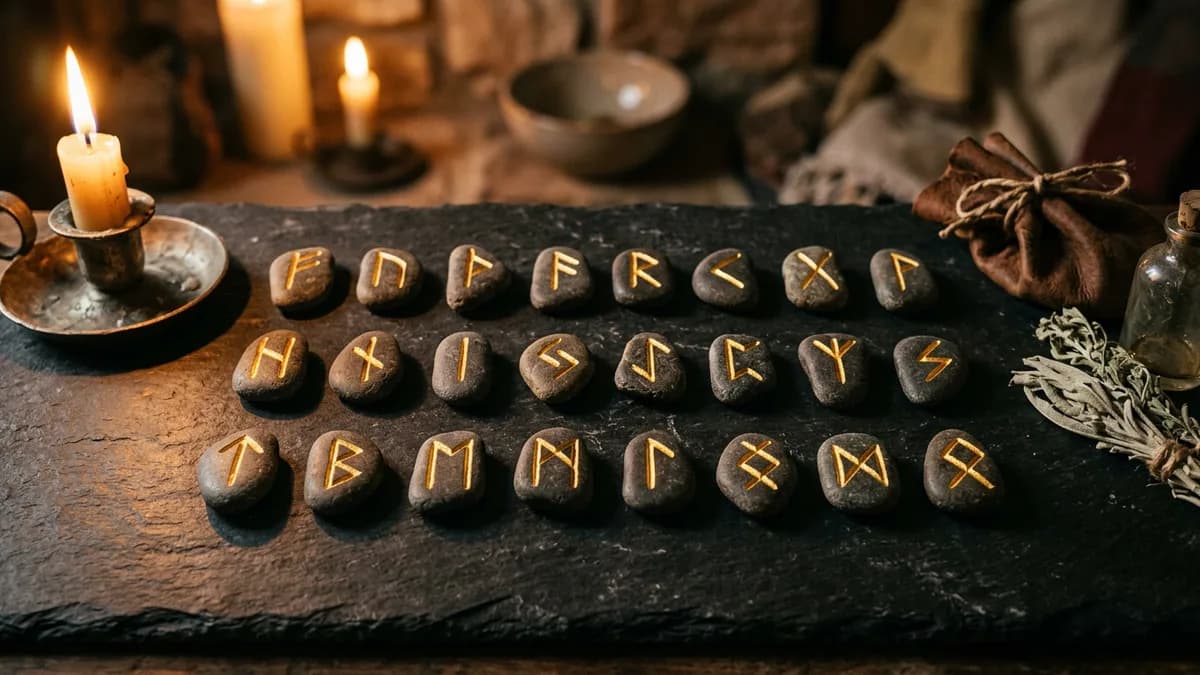
Meaning of the 24 Runes (Elder Futhark)
In brief: The Elder Futhark is an ancient system of 24 runes used for writing and divination, divided into three groups of eight runes called aettir. Each rune meaning…

The Three Aetts of the Runes and Their Meanings
In brief: The Elder Futhark consists of 24 runes, divided into three groups of eight, called aetts. The first aett (Freyr's) covers runes from Fehu to Wunjo. Its theme…
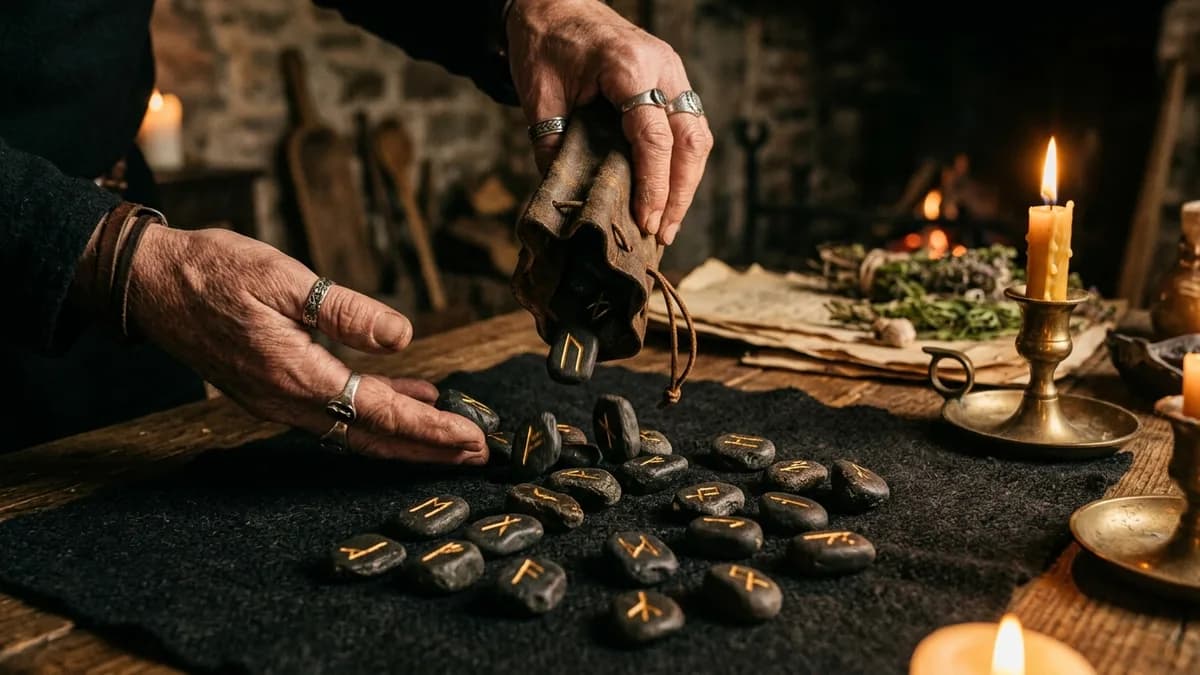
How to Read Runes - Step-by-Step Guide
In short: Successful rune readings begin with a well-formulated question – open-ended questions focused on action and self-reflection yield the most accurate answers…